

What Is a USDT Payment? How It Works for Businesses
Share
⏱️ TL;DR: A USDT payment is a transfer of Tether (USDT), a US dollar-pegged stablecoin, over a blockchain network. Businesses can accept USDT for online orders, SaaS subscriptions, and cross-border invoices. To manage these payments properly, merchants need to provide the correct network and payment details, verify incoming transactions, and connect each payment to the right customer or order. CCPayment supports these tasks through Hosted Checkout, Payment API, Invoice, and Permanent Deposit Addresses.
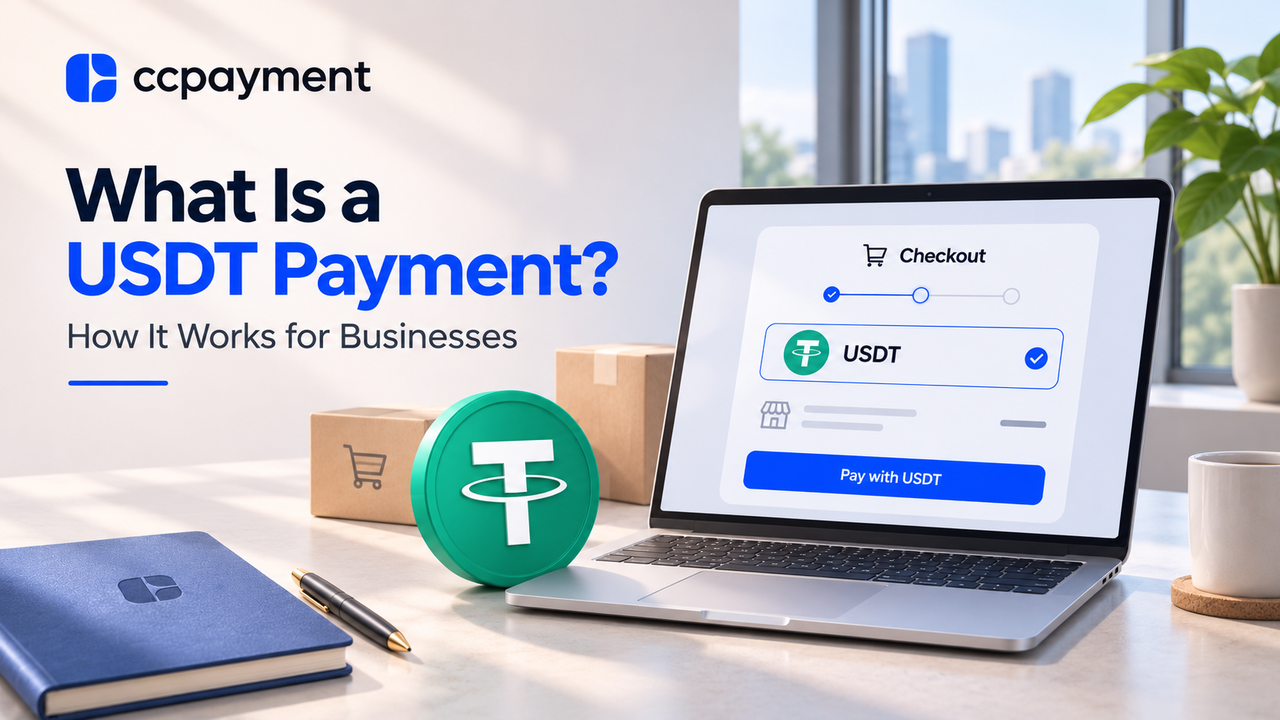
A SaaS company sells a $500 software plan to an overseas customer who prefers paying with USDT. Instead of entering card details or arranging a bank transfer, the customer sends USDT from a crypto wallet using the payment details provided at checkout.
The transfer may appear on the blockchain within minutes, but the merchant still needs to confirm the payment, identify the order, and activate the customer's subscription.
For businesses considering stablecoin payments, understanding these steps is important.
What Is a USDT Payment?
A USDT payment is a cryptocurrency payment made using Tether (USDT), a stablecoin designed to maintain a value close to one US dollar.
According to Tether, USDT is pegged to the US dollar and backed by the issuer's reserves. Unlike Bitcoin or Ether, whose market prices can change significantly, USDT is designed to maintain a more stable value relative to the US dollar.
However, paying 500 USDT is not the same as transferring $500 through a bank. USDT is a digital token transferred on a blockchain, not a bank deposit. Its market value can fluctuate, and converting it into fiat currency requires a separate process.
USDT is issued on multiple blockchain networks, including Ethereum and TRON. A customer sending USDT through TRON (TRC-20) must use a receiving address that supports USDT on that network. They cannot simply send it to an Ethereum-only USDT payment request.
Businesses should always check both the token and network before accepting a transfer.
How Does a USDT Payment Work?
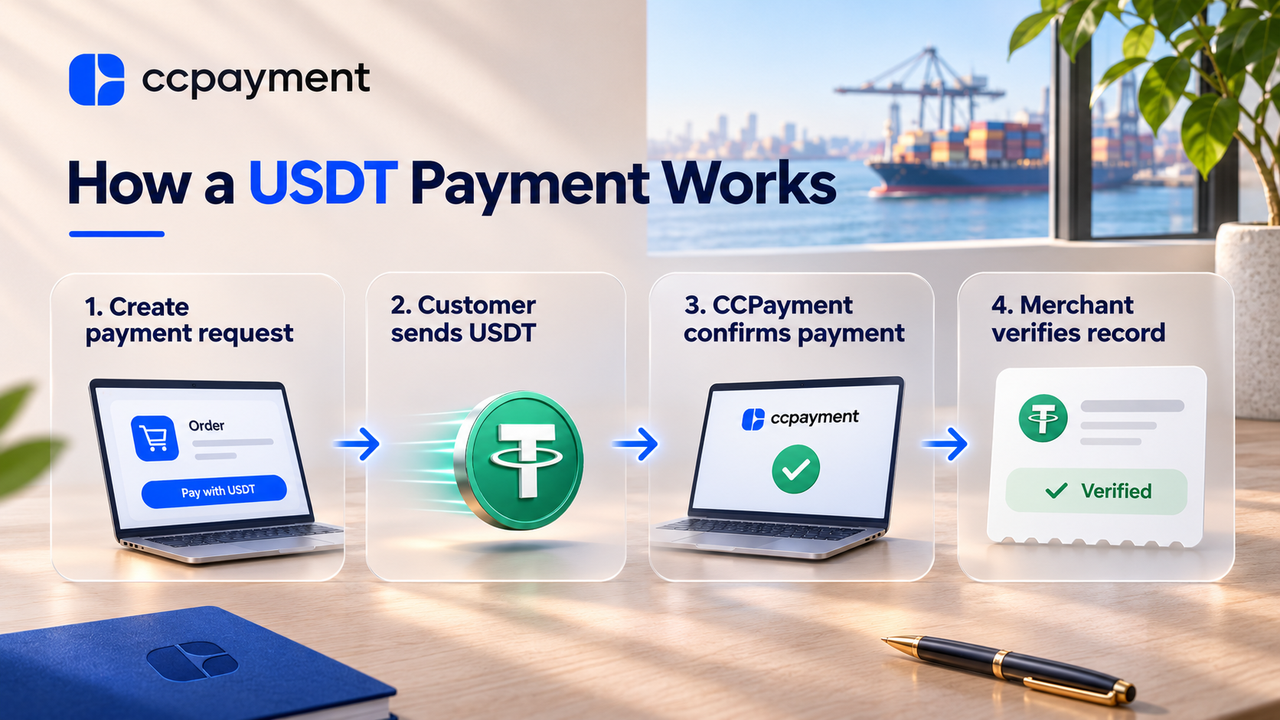
A USDT payment involves creating a payment request, transferring tokens, confirming the transaction, and updating the merchant's records.
The Merchant Creates a Payment Request
The merchant first specifies what the customer needs to pay.
For example, an online store may create a $120 order and offer USDT as a payment option. A payment gateway can calculate the corresponding USDT amount and provide the receiving address, supported network, and payment instructions.
When an order is created through a payment gateway, it can also be associated with a unique order identifier. This makes it easier to tell which purchase a payment belongs to.
Without that connection, receiving USDT in an ordinary wallet does not automatically tell the merchant which customer placed the order.
The Customer Selects a Network and Sends USDT
The customer uses one of the USDT networks available for that payment request and sends the required amount. Before confirming, they should check:
- Token: USDT
- Network: The exact network supported by the payment request
- Address and amount: The details provided by the merchant
Customers may also need the network's native token, such as ETH on Ethereum or TRX on TRON, to cover transaction fees when sending from a self-custody wallet.
Once the transfer reaches the blockchain, the payment provider monitors its confirmation status. The merchant then verifies the payment record before marking the order as paid or delivering the service.
For businesses handling many orders, automated payment detection and reliable transaction records are essential to this process.
Why Do Businesses Accept USDT Payments?
USDT can be useful for businesses whose customers already use stablecoins, particularly when payments involve different countries, time zones, or online services.
Serve Customers Who Already Hold Stablecoins
Some customers already keep USDT in crypto wallets for trading, online purchases, or business transactions.
Accepting USDT allows these customers to pay directly rather than exchanging their assets into another cryptocurrency or arranging a different payment method.
This can be relevant to digital marketplaces, SaaS platforms, and cross-border businesses serving crypto-active customers.
BitPay identifies cross-border B2B settlement, contractor payments, and high-ticket retail purchases among common business uses for stablecoins.
Keep Pricing More Predictable Than Volatile Crypto
A business selling a $500 subscription needs to know how much it is charging.
USDT's dollar peg makes it easier to express payment amounts in familiar USD terms than using a cryptocurrency with frequent price changes.
This does not eliminate stablecoin risks or guarantee an exact dollar redemption value for every holder. However, it can reduce the exposure to short-term price movements associated with accepting more volatile cryptocurrencies.
Add a Payment Rail That Operates Across Time Zones
Blockchain networks operate outside traditional banking hours. Customers can submit USDT payments during weekends, holidays, or outside the merchant's local business hours.
As Visa explains in its cross-border stablecoin analysis, stablecoin transfers can support around-the-clock blockchain settlement, although processing times, compliance checks, and fiat conversion depend on the services involved.
For international businesses, this provides another way to receive customer payments without relying exclusively on bank transfer schedules.
How Can Businesses Accept USDT with CCPayment?
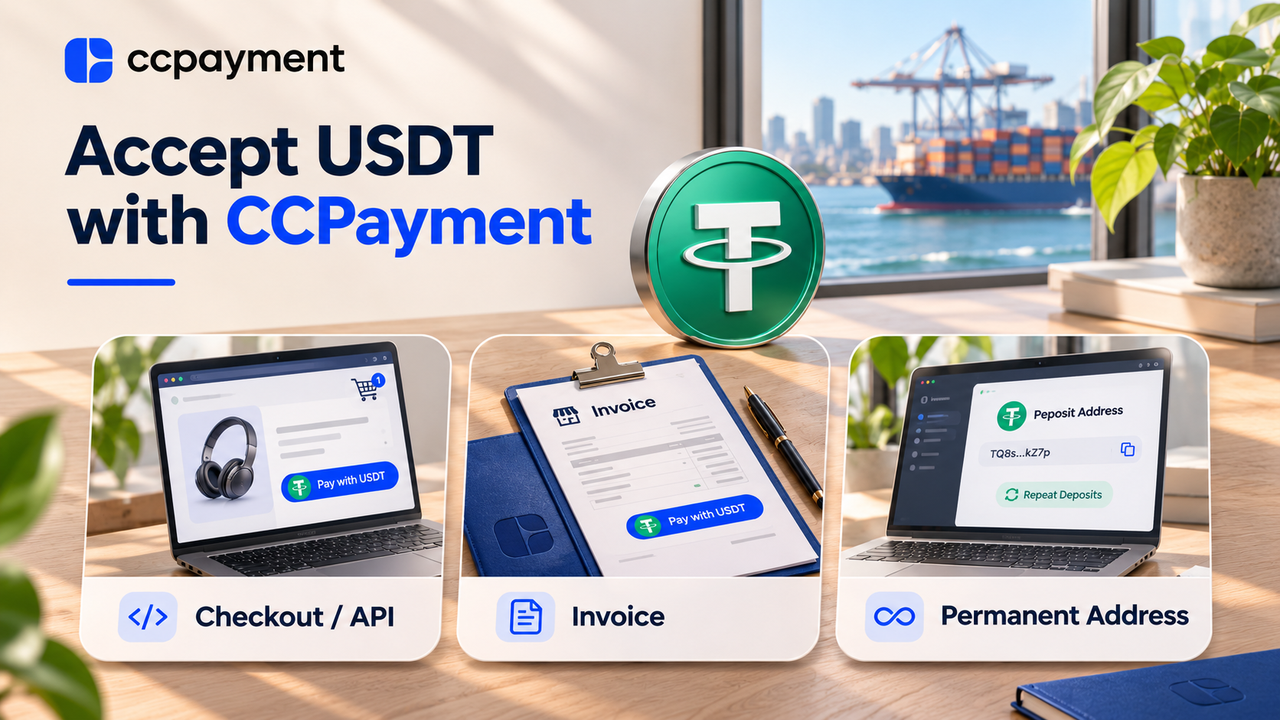
Businesses can use CCPayment to accept USDT without manually monitoring every transaction from a blockchain wallet.
The right method depends on whether customers pay through a website, receive individual invoices, or make repeated deposits.
Use Checkout URL for Online Orders
For e-commerce stores, SaaS platforms, and automated services, CCPayment supports order-based payments through its Payment API.
Merchants can request USDT payment details for a specified network or let customers choose from the merchant's enabled cryptocurrencies and networks.
CCPayment monitors incoming transactions and sends Webhook notifications. The merchant verifies the notification signature and queries the corresponding order information before fulfilling the purchase.
Repeated notifications must not cause duplicate fulfillment. The integration should use the payment's unique record or order identifier for idempotent processing.
Businesses can learn more about suitable checkout setups through CCPayment's E-commerce & SaaS solutions.
Use Invoice for Direct Client Billing
Not every business needs website checkout.
Agencies, consultants, and B2B service providers can create USDT payment requests through CCPayment Invoice in the Merchant Dashboard, without developing an API integration.
For example, an agency can issue a $2,000 project invoice, select USDT as the receiving cryptocurrency, and send the payment request to its client.
The merchant can track the invoice status and related payment records without manually matching wallet transfers to emails or spreadsheets.
Use Permanent Addresses for Repeat Customers
Platforms that receive repeated deposits may prefer Permanent Deposit Addresses.
CCPayment can assign a reusable receiving address linked to a specific customer reference and blockchain network. Customers can reuse that address for future deposits on the same supported network without requesting a new address each time.
This is useful for account funding, gaming platforms, and services where users regularly add funds.CCPayment tracks incoming deposits and provides records and Webhook notifications. Merchants verify successful, non-risky payments before updating customer balances in their own systems.
Transaction details and service fees can also be reviewed through the Merchant Dashboard or Get Deposit Record API.
After receiving USDT, merchants can retain it in their CCPayment balance or manage it according to their treasury needs. Optional Auto-Swap can convert eligible incoming assets into a selected token, while converting USDT into bank-held USD requires a separate fiat settlement process.
Businesses should review the available USDT networks and supported cryptocurrencies before configuring their payment methods.
Start Accepting USDT Payments with CCPayment
A business can receive USDT with a wallet address, but managing customer payments requires more than receiving tokens.
For online orders, direct client invoices, and recurring deposits, CCPayment provides payment details, transaction monitoring, and records that help merchants keep payments connected to their business operations.
Create a CCPayment merchant account to start accepting USDT, or book a call to discuss your payment integration.
Crypto Adoption for Business 2026
Deep dives into Web3 payments, industry trends, and how to scale your global commerce with zero-code integrations.
FAQ
Q1: Is a USDT payment the same as a USD bank transfer?
A: No. USDT is a blockchain-based stablecoin pegged to the US dollar. Receiving USDT does not automatically deposit USD into a bank account. Fiat conversion and bank settlement require a separate service.
Q2: Can customers send USDT through any blockchain network?
A: No. Customers must use a USDT network supported by the merchant's payment request. A transfer sent through the wrong network may not be credited correctly, and recovery may be difficult or unavailable.
Q3: Can a business accept USDT without a website or API integration?
A: Yes. CCPayment Invoice lets businesses create, send, and track USDT payment requests from the Merchant Dashboard without developing an API checkout. This can suit agencies, freelancers, consultants, and B2B service providers billing known clients.
Q4: Why use a USDT payment gateway instead of a wallet address?
A: A wallet address can receive USDT, but it does not automatically identify the customer or order, verify the payment status, prevent duplicate fulfillment, or create structured reconciliation records. A USDT payment gateway connects these steps with the merchant's payment workflow.