Coins.Game Crypto Payments: A 3-Year CCPayment Case Study

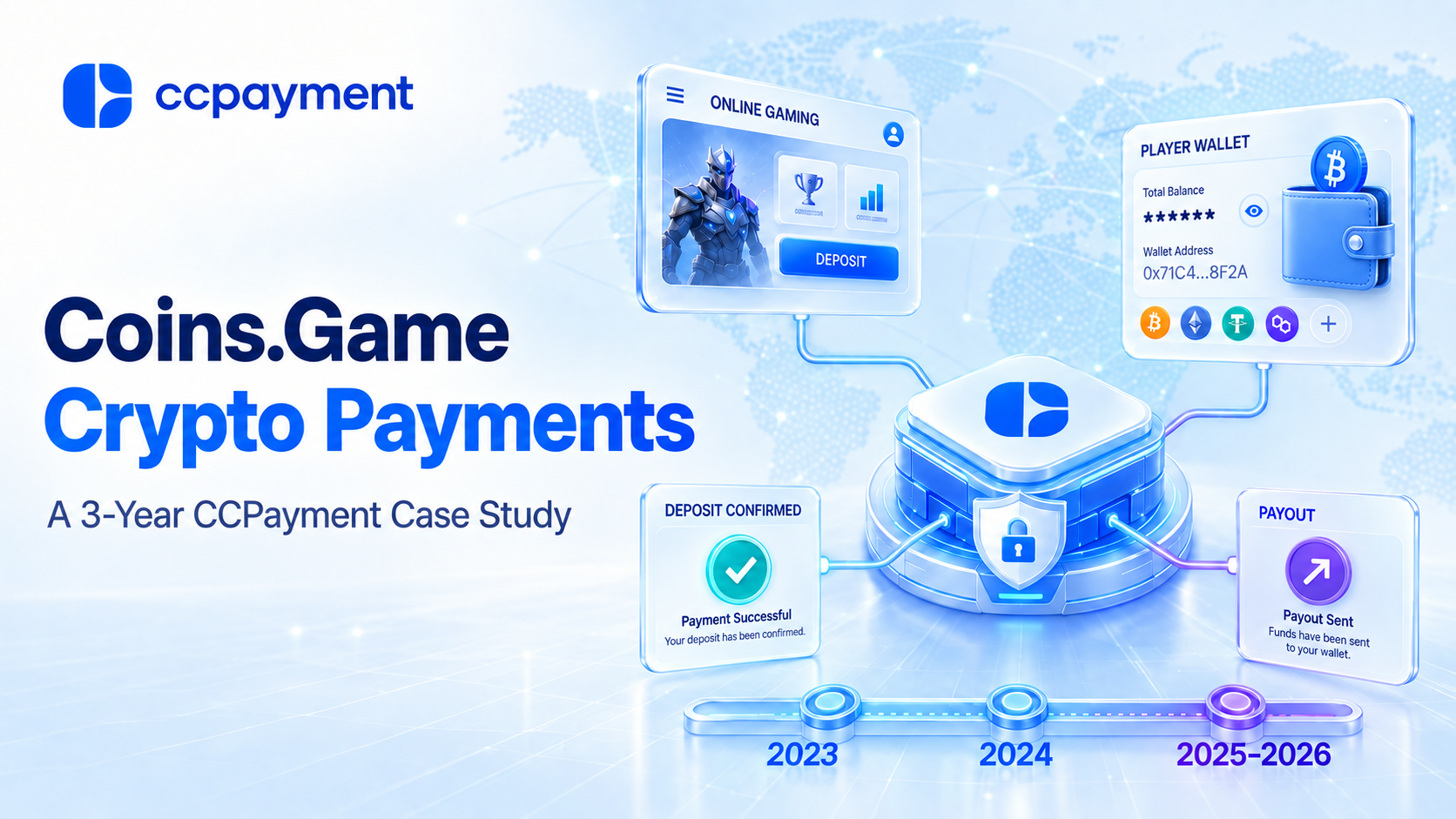
⏱️ TL;DR: Coins.Game has used CCPayment to process player deposits and withdrawals for three years. This case study explains how the global casino and sportsbook uses permanent player addresses, multi-chain deposits, webhook-driven crediting, batch payouts, KYT screening, and transaction-level reconciliation to manage player funds through one connected payment flow.
About Coins.Game and Its Payment Requirements
Coins.Game operates an online casino and sportsbook that serves players across multiple jurisdictions. Like most platforms in the iGaming space, its payment requirements don't look like a typical ecommerce checkout. Players deposit funds before they play. Those deposits must appear in the player's account balance quickly. When players win and withdraw, the payout needs to settle without delay. Every transaction must be traceable, every balance must reconcile, and every incoming payment must be screened before it is treated as available platform funds.
That's a different operational problem from simply accepting Bitcoin on a checkout page. It requires inbound deposits, outbound withdrawals, internal accounting, and compliance checks to operate continuously across time zones. The payment layer therefore becomes part of the platform's core infrastructure.
The broader gaming industry is also moving toward more integrated digital payment operations. The American Gaming Association notes that digital payments can improve player convenience while supporting responsible gaming and regulatory controls. For an online platform such as Coins.Game, the operational scope extends beyond payment acceptance to deposits, withdrawals, reconciliation, risk screening, and treasury management. CCPayment supports these functions across the player fund cycle.
Since partnering with CCPayment in 2023, Coins.Game has used the integration to support a broader range of assets and payment operations. The relationship has expanded beyond basic deposits and withdrawals to include transaction tracking, payouts, risk controls, and reconciliation.
The Payment Challenges Behind a Global Gaming Platform
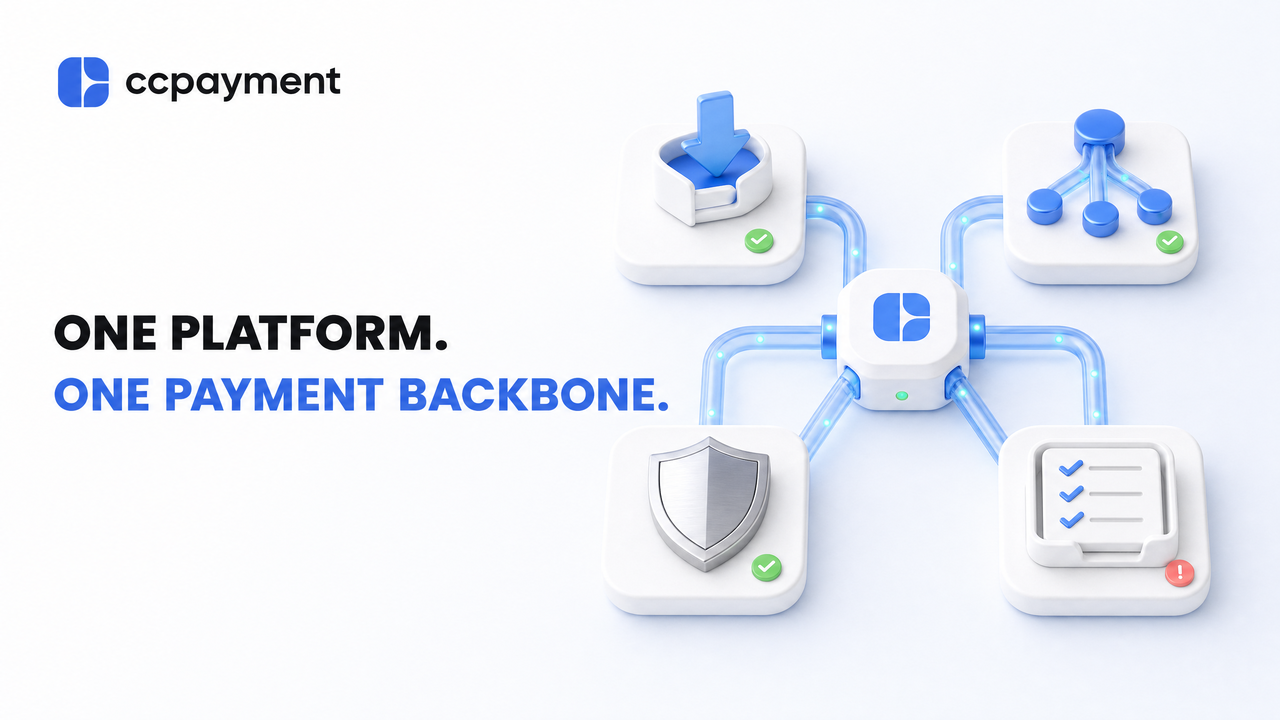
Online gaming platforms face payment requirements that are more continuous and operationally complex than a typical ecommerce checkout.
Players expect deposits to be credited quickly after the required blockchain confirmations. When a player sends USDT on TRON, an unexplained delay between the on-chain payment and the casino balance can create confusion, support requests, and interrupted play.
Multiple assets and networks multiply complexity. Players may want to deposit BTC, ETH, USDT, USDC, TRX, and other supported assets across multiple networks. Each chain has its own confirmation model, its own transaction format, and its own failure modes. Supporting them all without a unified infrastructure means building and maintaining separate integrations for each network.
Deposits, withdrawals, risk controls, and financial records are often managed through separate tools. Moving transaction data between a deposit processor, withdrawal workflow, screening service, and accounting system increases the risk of delayed updates, inconsistent records, and manual reconciliation.
Coins.Game needed to connect deposits, payouts, risk screening, and reconciliation within one payment workflow. The CCPayment integration was used to provide that operational layer.
How CCPayment Supports the Coins.Game Payment Flow
Player Deposits and Payment Recognition
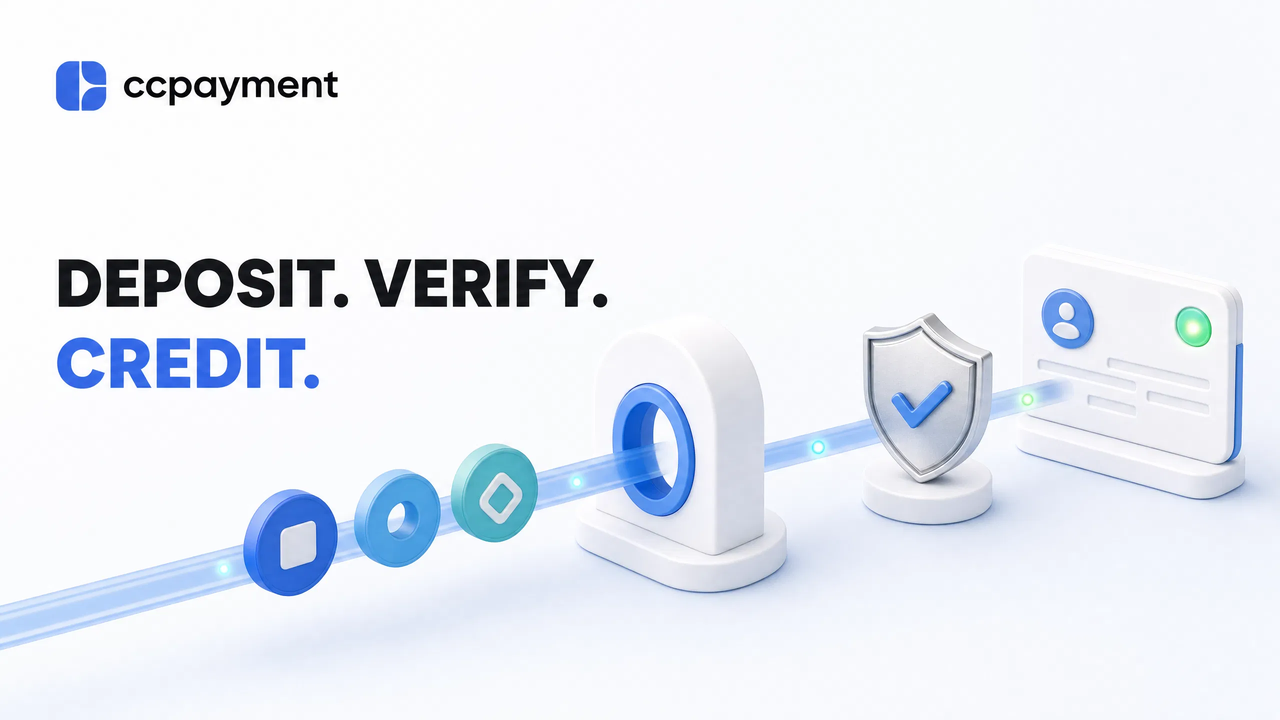
Coins.Game can assign a permanent deposit address to each player for the supported assets and networks enabled by the platform. Players can save it in their wallet and use it repeatedly without going through a checkout flow each time.
When a player sends funds to their deposit address, CCPayment monitors the blockchain for the transaction. Once the required confirmations are reached, a webhook fires to the Coins.Game system. The webhook carries the transaction details: type, record id, coin information,network and status.
Here's a detail that matters for iGaming operators: a webhook is a notification, not authorization. Before Coins.Game credits a player's balance, the system verifies the payment record through the API to confirm the amount, asset, and status. That verification step is what separates a reliable payment flow from one that double-credits when a webhook retries.
The permanent address model matters for iGaming specifically because players make frequent, small deposits. For a deeper look at how permanent addresses support high-frequency betting, see our permanent deposit address API guide. A player might fund their account three times in a single session. Forcing them through an invoice generation step each time creates friction that directly costs the platform in abandoned deposits. The permanent address removes that step entirely.
Withdrawals and Payout Operations
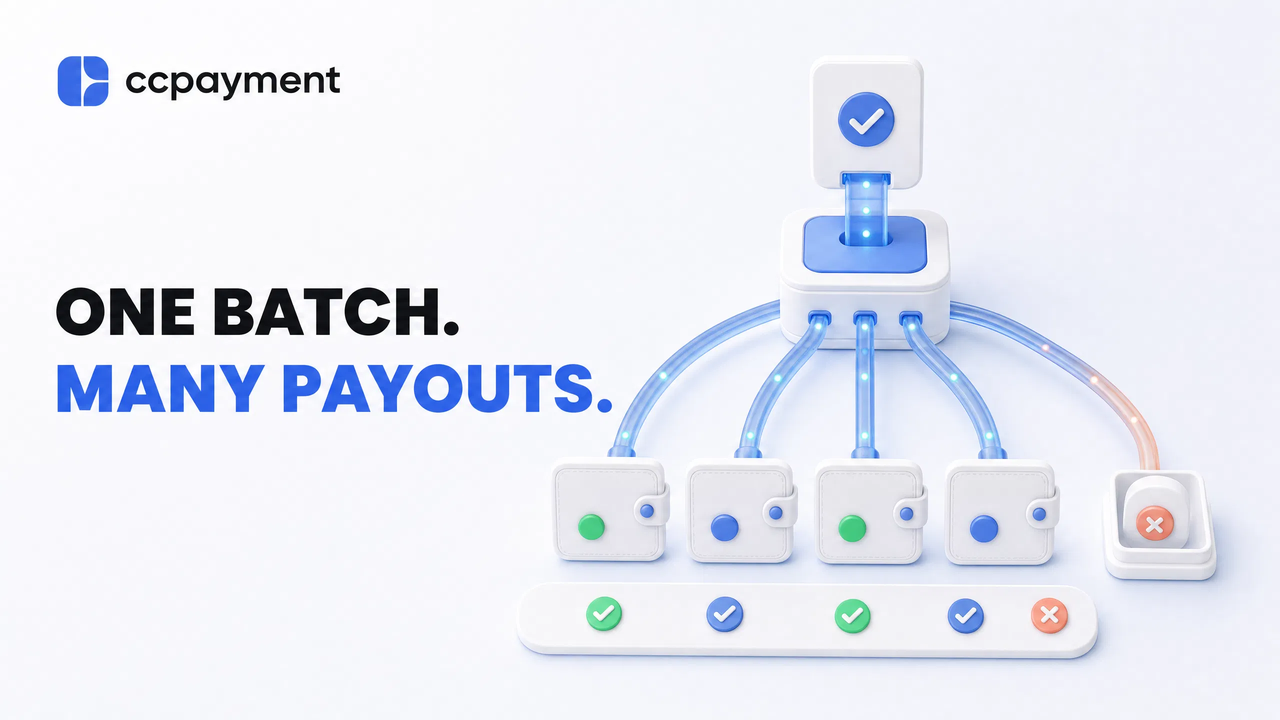
On the withdrawal side, Coins.Game uses the CCPayment Batch Withdrawal API to process approved player cashouts and other outbound payments. A single API call can include up to 500 recipient addresses, each with its own amount and asset. The system handles validation, execution, and status tracking for every sub-order individually.
For a gaming platform, this is the difference between a withdrawal queue that a finance team manually processes and an automated payout operation that runs continuously. After a player requests a withdrawal and the platform approves it, the API submits the payment and returns the corresponding status and transaction hash. These records can then be incorporated into the platform's reconciliation workflow.
If a withdrawal fails, the platform can review the failure reason in the transaction record and determine whether the request should be corrected, resubmitted, or reviewed manually.
Transaction Data, Risk Controls, and Reconciliation
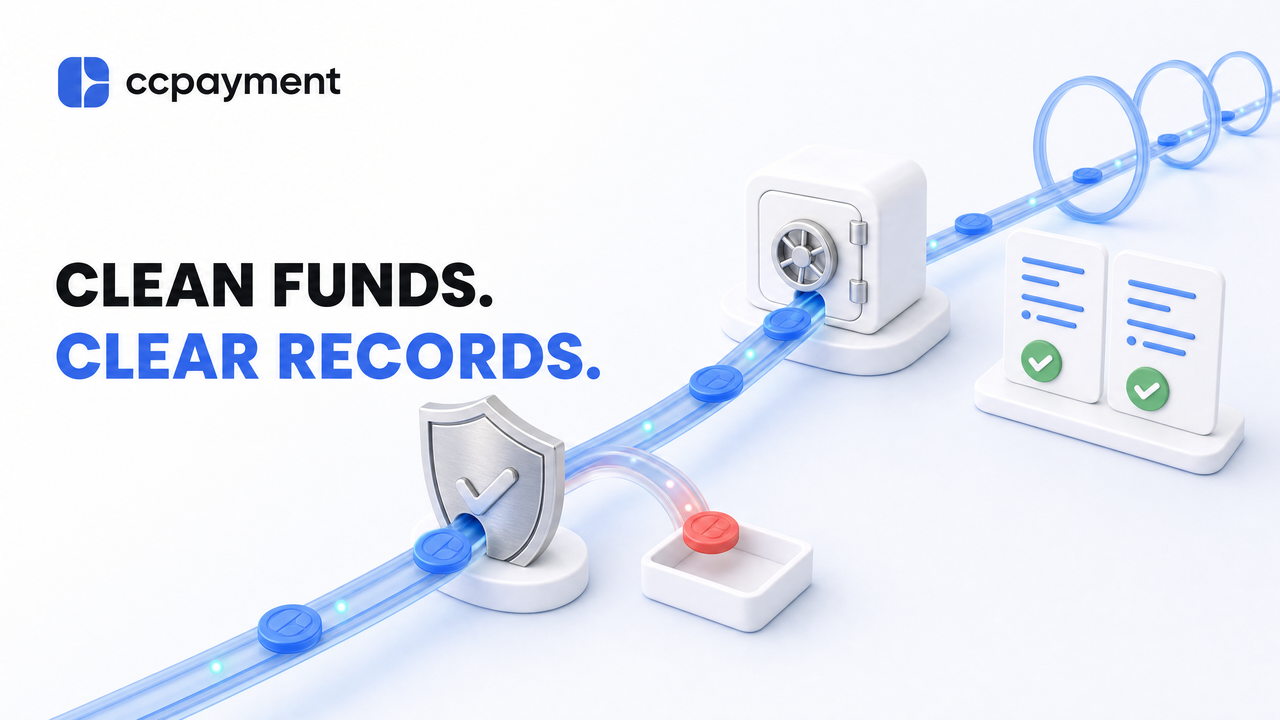
Every deposit and withdrawal on CCPayment generates a structured transaction record that Coins.Game can query through the API. The record includes the on-chain transaction hash, asset, amount, status, and timestamps. That data feeds directly into the platform's internal accounting system.
On the risk side, CCPayment screens inbound transactions through third-party KYT and AML providers. If an incoming transaction is associated with a sanctioned or high-risk source, it can be flagged for review before the platform treats the funds as available. Coins.Game's compliance team sees the flag and can act on it without running their own blockchain analytics infrastructure.For more detail on KYT-driven risk isolation, treasury controls, and high-volume iGaming payments, see our stablecoin payment infrastructure case study for iGaming.
The result is a payment flow where deposits, withdrawals, risk screening, and reconciliation all run through the same API. No bolt-on vendors. No gap between the player ledger and the on-chain record.
What Three Years of Partnership Changed
Over three years, the integration has given Coins.Game a consistent way to manage payment data as its operations have expanded. Deposit, withdrawal, risk, and reconciliation records follow the same workflow, making payment issues easier for operations, finance, and compliance teams to investigate.
Without connected transaction data, payment investigations can require support, finance, and compliance teams to compare information across different systems. Through the CCPayment integration, Coins.Game can reference the same transaction history when reviewing a payment.
A single payment record shows the deposit, the webhook notification, the verification status, and the on-chain confirmation. This reduces the time and manual coordination required to investigate payment questions.
The outcome is a payment operation that scales with the platform. When Coins.Game enables another CCPayment-supported asset or network, it can extend the existing integration instead of building a separate blockchain connection from the ground up. The same payment architecture continues to support higher transaction volumes as the platform grows. This architecture has allowed the payment workflow to remain consistent as the platform's activity and asset requirements have grown.
For platforms evaluating their own payment infrastructure, the Coins.Game integration is a useful reference. It shows what an iGaming crypto payment gateway looks like when deposits, payouts, risk controls, and reconciliation are treated as one system rather than four.
Ready to Build the Same Payment Flow?
If you're evaluating crypto payment infrastructure for an online casino or sportsbook, begin with one deposit flow and one payout flow. Assess whether permanent addresses fit the player experience, how webhook verification connects to your crediting logic, and whether CCPayment's transaction records provide the data required for reconciliation.
Talk to the CCPayment team to discuss how a similar deposit and payout workflow could fit your platform.
👉 Talk to a Solution Architect
👉 Explore the API Documentation
FAQ
Q1: What should online casinos and sportsbooks look for in a crypto payment solution?
A: iGaming operators need more than a crypto checkout tool. A suitable solution should support recurring player deposits, approved withdrawals, multi-asset and multi-network payments, transaction monitoring, and records for reconciliation. CCPayment is designed to connect these payment activities in one workflow, helping operations, finance, and compliance teams manage player-fund activity more consistently.
Q2: How can an iGaming crypto payment gateway simplify player deposits?
A: iGaming platforms often handle frequent repeat deposits, so requiring players to create a new payment order for every transaction can add unnecessary friction. CCPayment supports permanent deposit addresses, allowing operators to assign reusable addresses for supported assets and networks. The platform can then monitor incoming transactions, verify the payment record, and credit the player balance according to its own deposit workflow.
Q3: How can iGaming operators automate crypto withdrawals and payouts?
A: Automated payout infrastructure can help iGaming operators manage approved player withdrawals without relying entirely on manual payment queues. CCPayment’s Batch Withdrawal API enables multiple recipient payments to be submitted in one request, while retaining individual transaction records and statuses for each sub-order. This gives payment and finance teams clearer visibility into payout processing, including successful, pending, and failed transactions.
Q4: Why are KYT and AML controls important for iGaming crypto payments?
A: A blockchain confirmation establishes that a transaction has been made, but it does not independently assess the potential risk associated with the source of funds. CCPayment screens inbound transactions through third-party KYT and AML providers, allowing potentially elevated-risk transactions to be flagged under applicable screening rules. Operators can use this information in their review process before treating funds as available platform funds.
Q5: How can iGaming operators reconcile crypto deposits and withdrawals?
A: Effective crypto reconciliation requires a clear connection between the platform’s internal payment event and the corresponding blockchain transaction. CCPayment provides structured transaction records that can include the asset, network, amount, payment status, timestamps, and on-chain transaction hash. By connecting deposit, withdrawal, verification, and risk-related information, these records can help operations, finance, and compliance teams investigate payment exceptions with less manual comparison across systems.
Crypto Adoption for Business 2026
Deep dives into Web3 payments, industry trends, and how to scale your global commerce with zero-code integrations.