How B2B Businesses Can Accept Crypto Payments with CCPayment: An AI SaaS Example

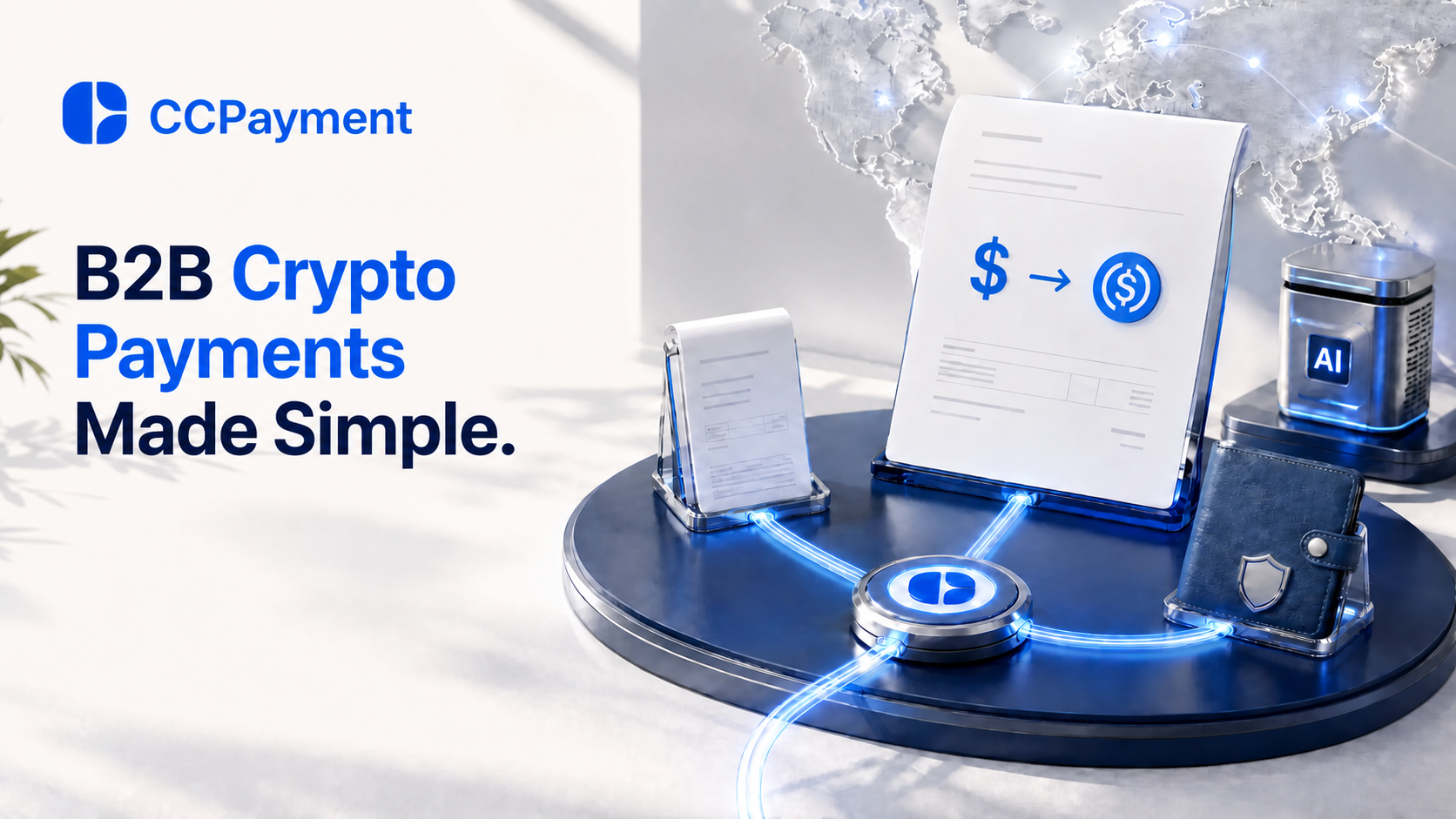
⏱️ TL;DR: Cross-border B2B payments still run on rails built for a slower era in which multiple intermediaries, multi-day settlement, unpredictable fees. CCPayment gives B2B teams a cleaner path: accept stablecoin payments through invoices, per-order addresses, or permanent customer addresses, then retain the received assets, convert supported assets into stablecoins, or off-ramp to fiat.This guide covers the three acceptance models that matter most for global trade and cross-border SaaS.
Why Cross-Border B2B Payments Remain Difficult
You run an AI SaaS platform selling API access to enterprise customers in 14 countries. Your pricing is usage-based, billed monthly. A customer in Singapore crosses their usage threshold. You issue an invoice for $12,400. They pay via SWIFT. The payment takes four days, loses $180 to intermediary bank fees and FX spread, and your finance team spends another hour matching the payment to the right invoice because the SWIFT reference didn't include your invoice number.
Now imagine doing that for 200 customers across 20 countries, and at that point, the payment rails become an operational bottleneck. They're consuming operational capacity.
Stripe's research on crypto B2B payments points to the same pattern: traditional cross-border rails are slow, expensive, and opaque. The Federal Reserve's analysis of stablecoins in cross-border payments reaches a similar conclusion that stablecoin settlement removes multiple layers of friction that correspondent banking can't.
Stablecoins change the math. A USDC payment settles on-chain in minutes, with full status visibility and a transaction hash that's verifiable by both parties. Stripe's guide to stablecoin cross-border payments highlights exactly why B2B teams are making this shift that the payment itself becomes a timestamped event rather than a multi-day batched transfer.
For B2B teams considering crypto payments, the practical question is which acceptance model best fits their workflow.CCPayment supports three common payment models for B2B businesses within the same merchant environment. Invoices can be created directly from the Merchant Dashboard, while order-based payments and permanent addresses support API-based workflows.
Three Ways to Accept B2B Crypto Payments with CCPayment
Use an Invoice to Request a Payment
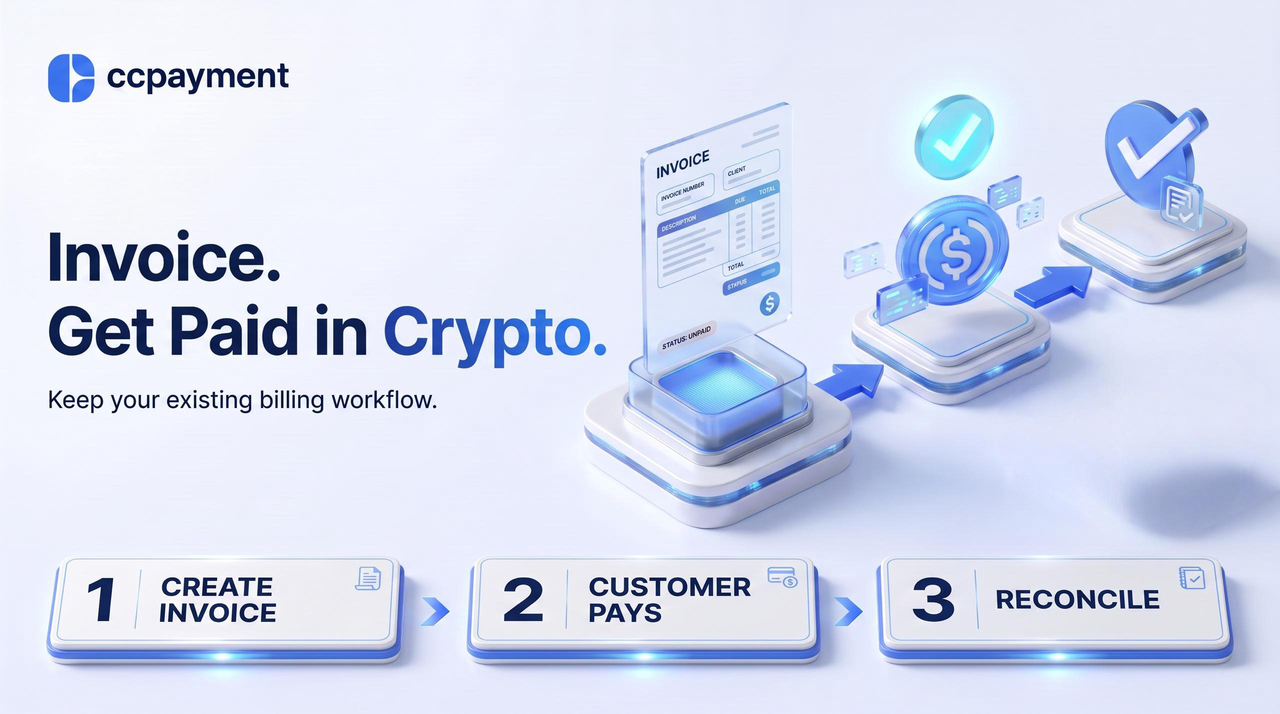
If your finance team already bills customers through invoices, accepting crypto shouldn't require a new workflow. CCPayment lets you create one-off or recurring invoices directly from the Merchant Dashboard, choose which cryptocurrencies to accept, and send the invoice by email or PDF.
For an AI SaaS provider, a one-off invoice works well for monthly usage charges or out-of-cycle fees, while recurring invoices suit fixed subscription or service charges.A finance user creates an invoice, specifies the amount due, and chooses whether to accept only USDC or a broader range of supported cryptocurrencies. Once the customer pays, the finance team can track the invoice status and connect the payment to the relevant billing record without manually matching a bank transfer.
This approach fits businesses that want to keep their existing invoicing process while giving international customers the option to pay with crypto.
Create an Order for Each Transaction
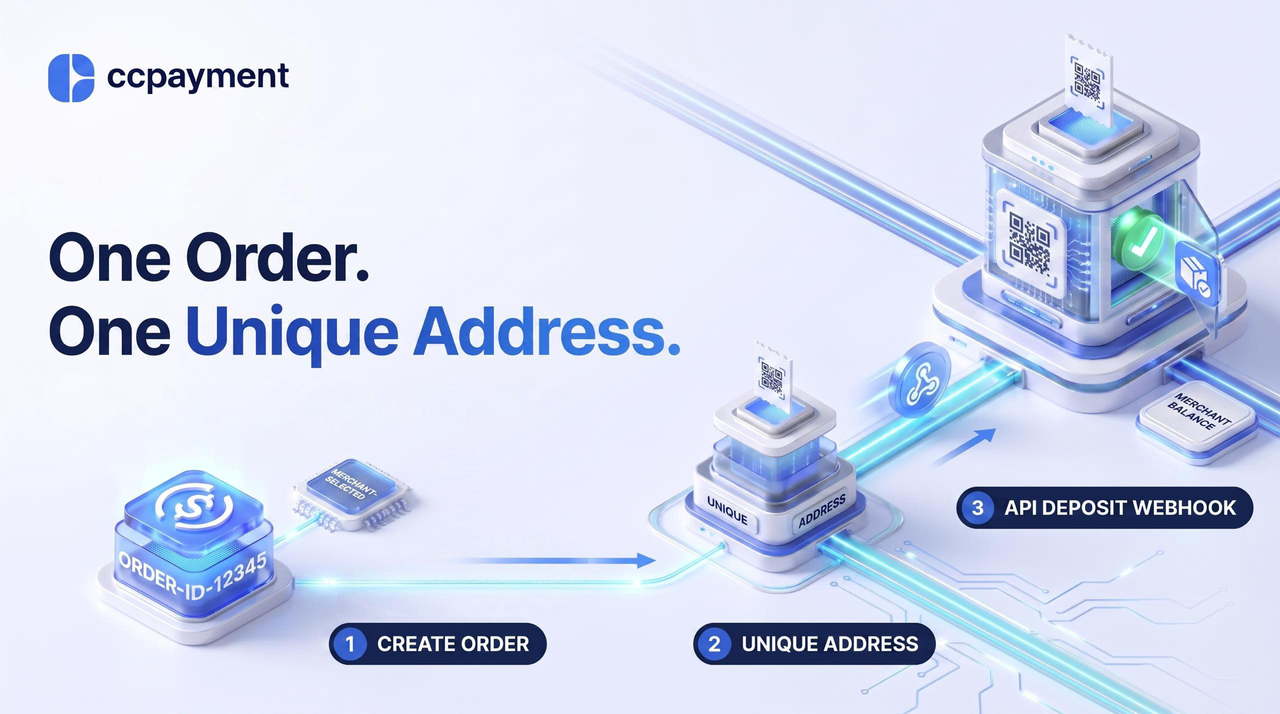
For a usage-based charge, API-credit purchase, or one-time license sale, create a payment order through the CCPayment Payment API. Each order has its own orderId and a transaction-specific deposit address for the selected coin and network.
After the customer pays, CCPayment sends an API Deposit webhook. Your system should verify the webhook and query the order record before unlocking API access, provisioning a seat, or issuing a product key. This gives your team a clear link between the payment, the order, the received asset, and the final payment status.
Assign a Permanent Address to Repeat Customers
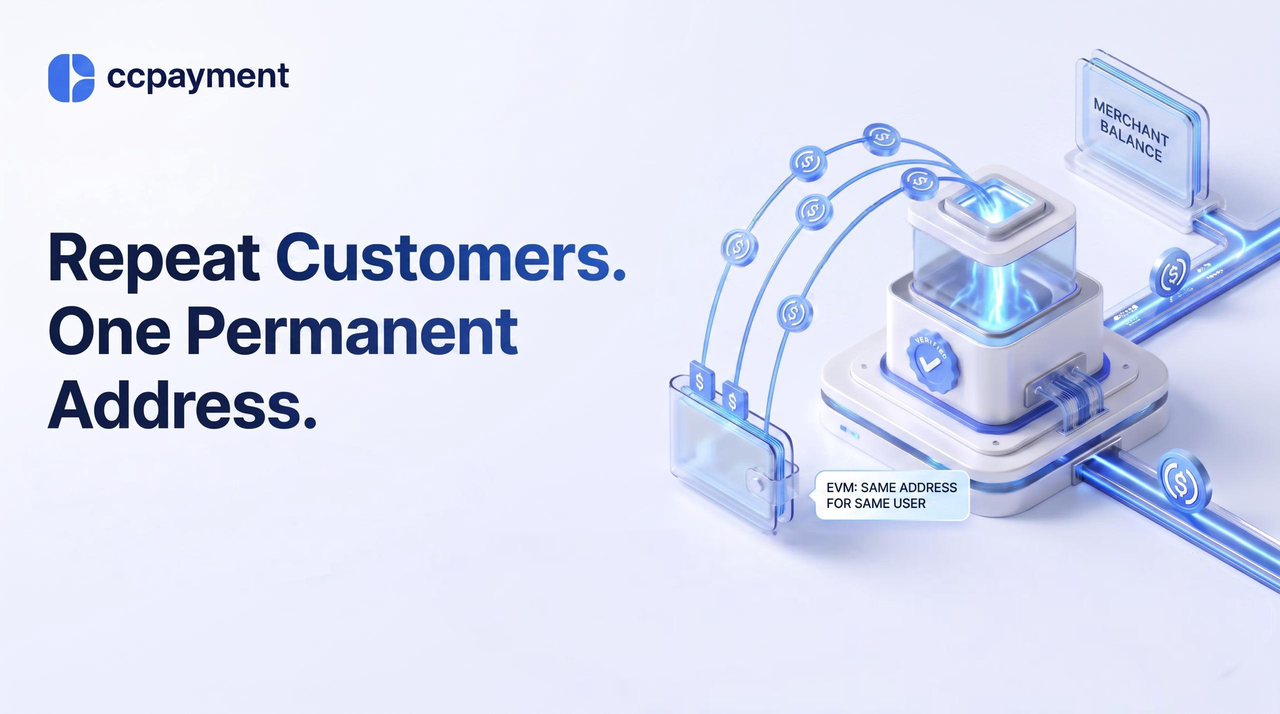
A Permanent Address suits repeat customers who fund prepaid balances or make account top-ups that are not tied to a newly created order each time. CCPayment returns a persistent deposit address for a customer referenceId on a selected chain. The same address is returned for that reference ID and chain unless it is unbound.
For an AI SaaS business, a verified enterprise customer can save its permanent address on the selected network and use it for future top-ups. When a payment arrives, CCPayment sends a DirectDeposit webhook containing the customer’s referenceId.After verifying the notification and retrieving the deposit record, your system can update the customer’s balance or API quota once the payment is confirmed and not flagged as risky.
This removes the need to create a new CCPayment order address or checkout link for every top-up. It does not identify the customer by the payer’s source address, and it should not replace your own billing or invoicing records when a fixed monthly receivable must be tracked.
For a complete walkthrough of B2B payment setup — including how to structure the customer account layer on top of permanent addresses — see our guide on setting up crypto payments for B2B transactions.
What Happens After a B2B Customer Pays?
Payment acceptance is only the start of the workflow. CCPayment sends a webhook when a transaction status changes, but your system should treat that event as a notification. It is not final proof of payment. You can pull transaction details via Get deposit record endpoint, while operations teams can review the corresponding record in the Merchant Dashboard.
After a payment is confirmed as Success and is not flagged as risky, your business can apply its own fulfillment rule: credit an AI SaaS account, unlock API access, provision seats, or release a digital product. Confirmed deposits are credited to the merchant balance. Risky transactions require review in the CCPayment dashboard and should not be automatically credited to a customer account.
After funds are credited, the business can retain the received asset or automatically convert supported cryptocurrencies into USDT or USDC through Auto Swap. When fiat is required, eligible merchants can use CCPayment's off-ramp to convert supported crypto balances into USD and settle to a corporate bank account.
Start Accepting B2B Crypto Payments with a Pilot
Most teams don't need to replace every payment flow on day one. Start with one customer or one payment scenario, validate the workflow, then expand gradually.
For an AI SaaS platform, the natural pilot is a single enterprise customer who has already requested a crypto payment option. Use an invoice for the customer's next fixed bill, or assign a Permanent Address if the customer regularly tops up a prepaid usage balance. Then measure the confirmation time, reconciliation effort, total payment cost, and steps required from both teams.
Explore the CCPayment Payment API or create an invoice from the Merchant Dashboard to test your first B2B crypto payment workflow.
👉 Get API access and run your first B2B payment pilot
FAQ
Q1: Which stablecoins should B2B businesses accept?
A: USDC and USDT are the practical defaults. They settle on multiple chains , including TRON, Ethereum, and BNB Chain. This gives your customers flexibility without adding complexity to your treasury.
Q2: Can I accept crypto but settle in fiat?
A: Yes. CCPayment's Sell USDT off-ramp converts stablecoin balances to USD and settles to your corporate bank account. The KYC process is streamlined for business accounts.
Q3: How does CCPayment support high-volume B2B payment cycles?
A: CCPayment's batch withdrawal API handles up to 500 recipients per batch, covering supplier settlements, affiliate commissions, and contractor payments in a single call. Webhook notifications fire for each transaction, and the reconciliation layer exports structured data for your ERP.
Q4: Is there a minimum transaction size for B2B payments through CCPayment?
A: CCPayment applies minimum thresholds to both deposits and withdrawals to help protect system stability and prevent abuse. The limit is not a single flat amount: it varies by token and blockchain network. Before creating a payment or payout flow, use the Get Token List endpoint to retrieve the current minimumDepositAmount and minimumWithdrawAmount for the relevant token and network.
Crypto Adoption for Business 2026
Deep dives into Web3 payments, industry trends, and how to scale your global commerce with zero-code integrations.