

How to Optimize High-Frequency Betting Settlement: eSports Betting Crypto API & iGaming Stablecoin Gateway Guide
Share
The 15-Minute Halftime Rush: Where High Concurrency Breaks Legacy Cashiers
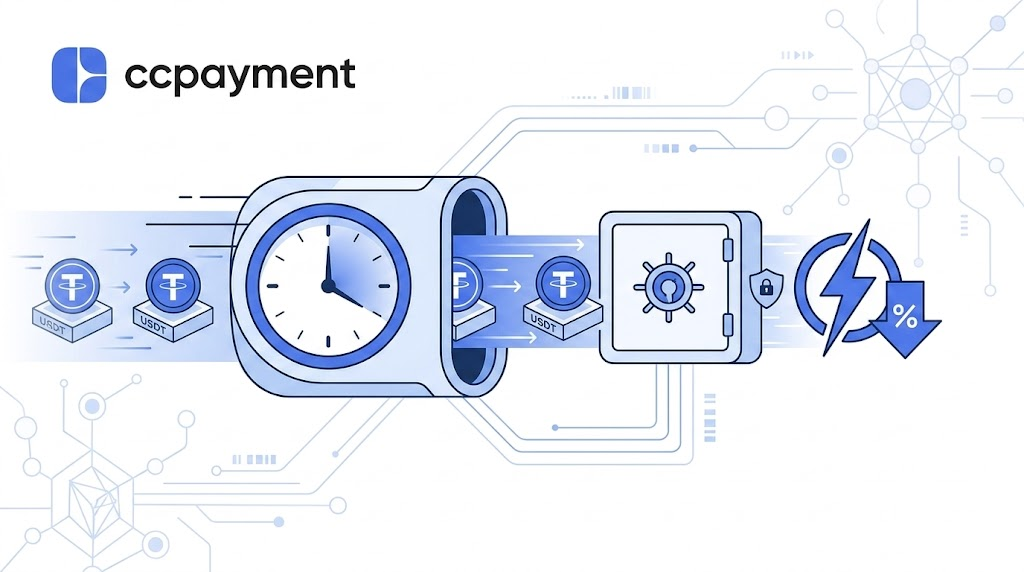
The 15-Minute Halftime Rush: Where High Concurrency Breaks Legacy Cashiers
For live wagering platforms expanding across high-velocity growth corridors in LATAM (Brazil/Argentina), Southeast Asia, and European licensing hubs like Malta, your user acquisition budget is effectively wasted if the underlying checkout funnel buckles under sudden traffic surges.
The primary operational risk sits directly inside the 15-minute mid-match break or the narrow windows between intensive eSports competitive maps. During these intermissions, tens of thousands of users attempt to reload their balances simultaneously, driven by intense emotional momentum to catch shifting live lines. Legacy payment processors rely on invoice-driven, dynamic address generation—a slow architectural loop that breaks player momentum right at the cashier:
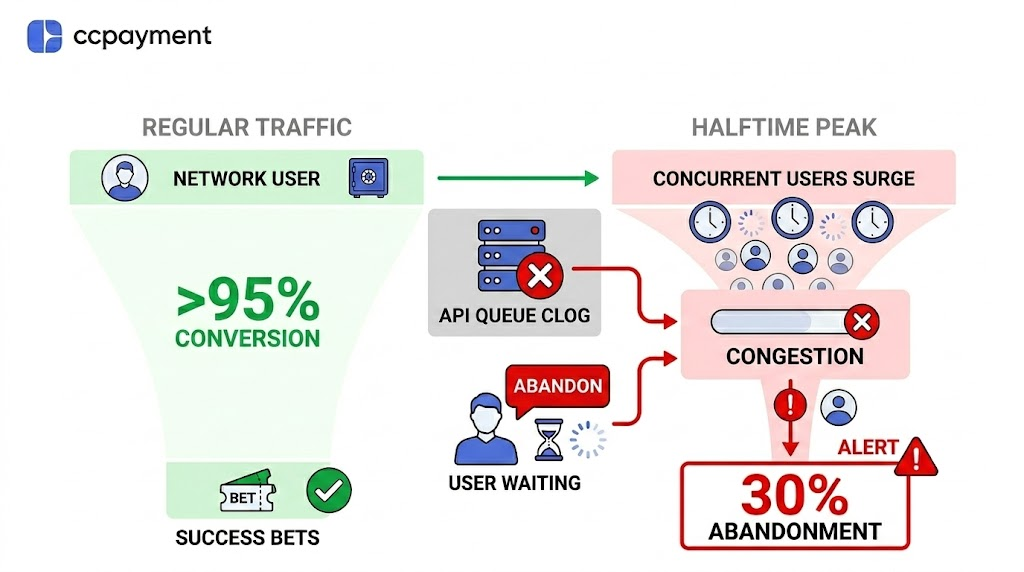
- The Halftime Conversion Leak: Massive traffic spikes force backend databases to generate a fresh wallet key on every single click, causing API request timeouts. Forcing a player to wait for a unique address to load on screen results in a 30% checkout abandonment rate before the deposit can even be initiated.
- The Dopamine Interrupt: In live in-play wagering, odds move in seconds. A mere 2-second clearing delay means the player's preferred spread has already closed, causing players to abandon their bet slips entirely and exit the app in frustration.
- The House Margin Drain: When thousands of low-tier micro-bets hit the network simultaneously, public mainnet gas fees spike unpredictably. On unoptimized payment rails, the network fee to settle a position can easily swallow the platform's house edge (vig), turning high-volume events into net losses.
Stablecoins Are Now Core iGaming Infrastructure
Digital currencies inside the sportsbook cash register have officially transitioned from a speculative Web3 alternative into an essential cross-border settlement rail.
Recent industry analysis from CoinDesk notes that "Stablecoins are now iGaming infrastructures"—fundamentally operating as the primary backend corporate accounting rails for high-velocity cross-border financial applications.
Better behavior metrics back up this structural shift. The latest market data published in the Paysafe Research Briefing on US Online Sports Betting proves that checkout velocity has evolved into a critical factor for player retention rather than a basic back-office utility:
📊 The Real Cost of Cashier Friction
- 83% Bettor Demand: An overwhelming majority of active sports bettors want to fund their online accounts with cryptocurrency when permitted.
- 71% The Churn Penalty: 71% of bettors will completely desert an online sportsbook if the payment checkout experience is clunky, slow, or delayed.
- Premium Market Impatience: This intolerance for friction spikes even higher in competitive wagering centers, reaching 75% in Florida and Illinois, and up to 80% in New York.
Why Most "Web3" Payment Plugins Are Just Web2 Code in Disguise
Many payment software providers market themselves as advanced, decentralized Web3 gateways. Under the hood, however, most still rely on an outdated Web2 sequential model: each deposit request triggers an isolated address generation call, a heavy database write, and a slow RPC polling loop to verify the transaction status.
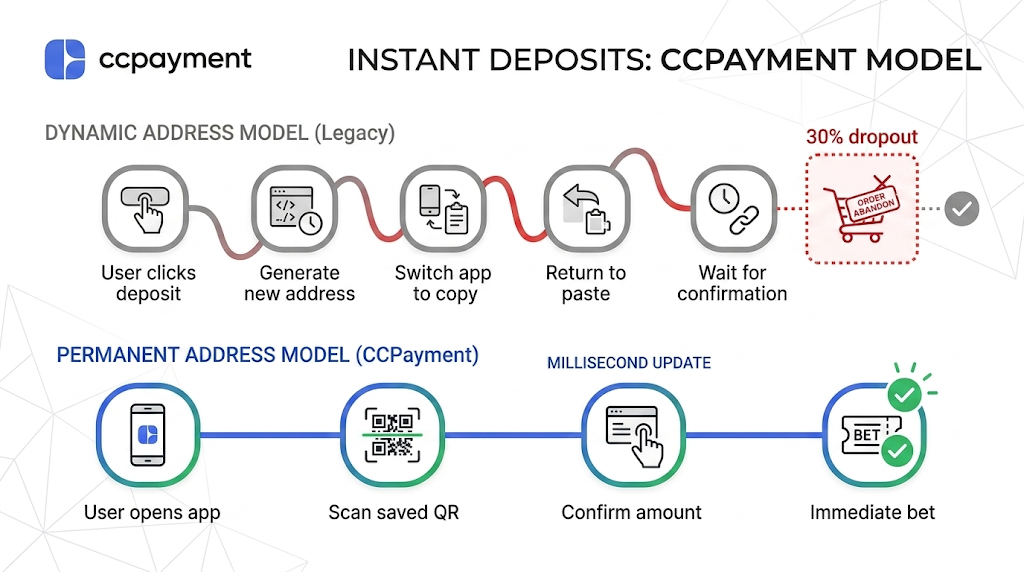
During high-concurrency, high-frequency betting settlement events, this technical debt hits sportsbook operators in two specific areas:
The Address Fragment Trap
Standard plugins cannot tie a permanent asset vault to a specific user account profile. Because every deposit requires a fresh temporary address, players are forced through a repetitive request-copy-paste sequence every time they want to top up. This layout completely fails the retention check when a VIP bettor wants to fund their account three or four times inside a single live match.
TRON Network Fee Exposure
Over 85% of global high-frequency betting settlement volume moves through USDT-TRC20 due to widespread consumer familiarity. Without active resource management, each outbound withdrawal burns roughly 13 to 14 TRX in raw network gas. Locking up corporate liquidity through raw TRX staking is highly inefficient and forces finance teams to deal with rigid unfreezing windows. Operators are left with a brutal choice: absorb the cost and watch micro-bet margins evaporate, or pass it to the user and crush deposit conversion rates.
CCPayment Permanent Address API & Automated TRON Energy Rental
CCPayment resolves this execution bottleneck by completely decoupling the underlying blockchain verification structures from the live order-matching engine cycles. Deployed via a unified enterprise eSports betting crypto API, the system eliminates settlement latency while shielding platform spreads from network fee volatility.
Maximizing High-Throughput Deposit Conversion via Permanent Addresses
Instead of forcing your database to compute fresh rows for every payment request, the CCPayment Permanent Deposit Address API programmatically maps a static, dedicated deposit route directly to each player's account profile upon registration. If an address is already linked to that specific reference ID, the system instantly returns it; otherwise, it provides a fresh one on demand. This removes checkout wait times entirely—turning your payment layer into a core retention tool:
- One Address for Multiple Chains: EVM-compatible networks (including Ethereum, BNB Chain, Polygon, and Arbitrum) automatically share the same deposit address string for a given user profile. This unified routing completely removes cross-network asset losses, reduces user configuration errors, and slashes customer support overhead.
- True Scan-and-Go Experience: Because the player's personal deposit routes never expire, users can save their static QR codes directly inside their private wallets. They can top up their balance anytime, with any amount, completely bypassing the tedious copy-paste invoice screens during high-stakes live match intervals.
- Instant Balance Synchronization: The exact millisecond a stablecoin deposit hits on-chain finality, an automated secure CCPayment Webhook Notification fires straight to your gaming backend. Engineered for high-frequency betting, our infrastructure guarantees highly reliable webhook delivery during massive concurrent traffic spikes. By supporting standard API idempotency best practices, we empower your backend to safely process account credits without the risk of database desync, ensuring a secure, zero-chargeback payment loop.
For developers and technical leads, initiating a permanent address mapping requires a simple, lightweight RESTful POST payload:
// POST Request Payload
{
"referenceId": "player_latam_9983",
"chain": "TRON"
}
// Response Payload From Gateway
{
"code": 10000,
"msg": "success",
"data": {
"address": "TYuSDF7xXmBvNqW4180Ceef39f251D72d",
"memo": ""
}
}
USDT Transaction Cost Optimization via Automated TRON Energy Rental
To solve the industry's network fee problem, CCPayment natively embeds an automated Rent TRON Energy Framework directly into the merchant dashboard:
- Predictable Treasury Modeling: Instead of locking capital into volatile staking protocols, operators purchase pre-allocated billing packages directly via the dashboard using TRX, USDT, or USDC, ensuring stable, fixed operational pricing for your treasury.
- Cost Per Withdrawal Drops by 50%+: When your platform initiates USDT transfers, the system automatically optimizes the network fee—delivering an immediate transaction cost reduction that saves over half compared to the standard mainnet cost.
- Automated System Application: No manual steps required at payout time. The engine automatically applies energy discounts to all eligible workflows on continuous autopilot, protecting your business from crypto network fee volatility.
Enterprise Infrastructure Comparison
Operational Capability | CCPayment Enterprise Suite | Legacy Crypto Gateways |
|---|---|---|
Deposit Workflow | Permanent Address (Instant Scan-and-Go) | Dynamic Address (Per-Tx Generation) |
Cross-Chain Mapping | Unified Vault Arrays (EVM chains share the same address) | Fragmented unique chain setup per network layer |
Halftime Abandonment Rate | Near-zero (~0% architectural latency) | Up to 30% due to API generation queues |
TRON Withdrawal Cost | ~6.5 TRX per transaction (automated energy applied) | 13–14 TRX per transaction (raw gas burning) |
Ledger Reconciliation | Sub-second event-driven webhooks with deduplication | Delayed RPC polling loops and database cron jobs |
Chargeback Settlement Risk | Absolute zero (zero chargeback betting payments) | Absolute zero |
Secure Your High-Frequency Betting Settlement Today
The platforms that win the summer tournament season won't necessarily be the ones with the best odds—they'll be the ones where players can actually fund their accounts instantly, every time. CCPayment gives you the permanent address infrastructure and automated energy rental that turns your payment layer from a cost center into a retention advantage.
Integrate enterprise-grade high-frequency betting settlement with merchant pricing starting at 0.2%.
👉 [Create Your CCPayment Account Now]
About CCPayment
The enterprise-grade crypto payment rail. Scale global commerce with an industry-low 0.2% fee, 900+ assets, and zero-code AI integrations.
🌐 Website: ccpayment.com → 📢 Official Channel: @CCPayment_Channel Join for weekly SaaS insights, Web3 trends, and API guides. 🤖 24/7 Support: @CCPaymentSupportBot
Crypto Adoption for Business 2026
Deep dives into Web3 payments, industry trends, and how to scale your global commerce with zero-code integrations.
FAQ
How does a permanent deposit address directly reduce player drop-off during live betting?
Traditional gateways create a new address per deposit, forcing players through a request-and-copy loop that can take 30–60 seconds. During a halftime window, that delay causes abandonment. A permanent address is saved in the player's wallet once, making every subsequent deposit a single scan—no generation, no waiting.
How does automated TRON energy rental directly protect platform margins during peak transaction spikes?
Standard mainnet USDT transfers force platforms to pay full public network fees on every withdrawal, which can rapidly eat into tight revenue spreads during high-volume periods. CCPayment’s automated energy rental framework slashes these network costs by over 50% instantly on autopilot. By replacing volatile mainnet pricing with stable, pre-allocated dashboard packages, operators eliminate gas spikes entirely and secure predictable treasury modeling without locking up corporate liquidity.
How do webhooks handle duplicate notifications during network traffic spikes?
To guarantee delivery, CCPayment utilizes an automated retry protocol that continues sending the webhook if network latency delays your server's acknowledgment. To prevent double-crediting or ledger drift under high concurrency, our system assists merchants by providing a unique transaction ID (txid) . By using this txid as a primary key to deduplicate incoming payloads, your backend can instantly filter out identical retries and maintain a 100% accurate financial ledger.
Does using permanent addresses create compliance or tracking issues?
No. Each address is mapped 1:1 to a user account, providing clearer fund provenance and transaction trails than rotating temporary addresses—which actually simplifies AML reviews and audit requests.
Featured on Medium