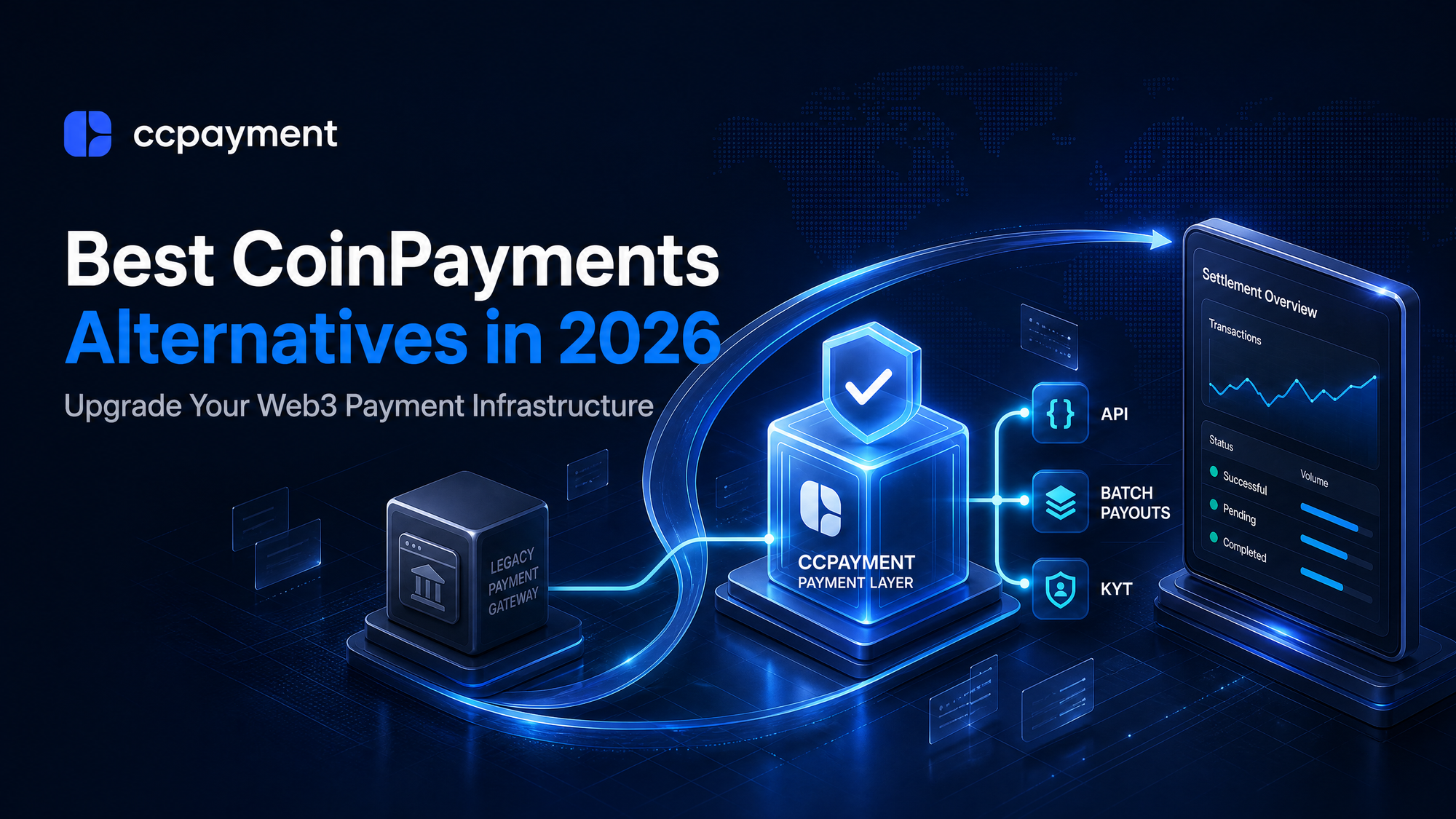
Best CoinPayments Alternatives in 2026: Upgrading Your Web3 Payment Infra
⏱️ TL;DR: CoinPayments remains established, but may not suit every Web3 business in 2026. This guide compares leading alternatives and shows how CCPayment supports batch payouts, AI integration, and KYT screening.

Who this is for: CTOs and payment engineers evaluating a gateway switch, iGaming operators scaling payouts, and Web3 treasury teams building compliant settlement infrastructure.
CoinPayments helped many businesses begin accepting crypto and remains a credible option today. But the payment infrastructure has changed. Modern Web3 businesses care about far more than checkout. They need reliable APIs, automated payouts, treasury controls, and developer-friendly workflows. If CoinPayments no longer fits those requirements, here are the best CoinPayments alternatives in 2026.
Why Are Businesses Replacing CoinPayments?
Businesses usually compare alternatives when their payment setup no longer fits the work around it. The issue may be a need for more flexible address models, less manual payout work, clearer treasury and reconciliation, or a more direct technical-support path for payment-critical issues. The practical question is whether a gateway’s automation, settlement options, and controls match the business you operate now.
A checklist before you shortlist
Before booking demos, define the task that actually drives payment risk: accepting a one-off checkout, managing recurring balances, issuing withdrawals, or reconciling a high-volume treasury. A modern crypto payment gateway should fit that workflow end to end. CTOs should compare Webhook reliability and data models; finance teams should compare settlement visibility and payout controls; operations teams should compare approvals and escalation paths. A developer-friendly crypto gateway should reduce integration maintenance, not simply add another endpoint.
Top 3 CoinPayments Alternatives in 2026
| Platform | Best For | Where It Fits |
| CCPayment | Web3 operators, iGaming, SaaS, AI workflows | Enterprise-grade multi-chain payment infrastructure, permanent addresses, webhook/API automation, KYT and settlement tools |
| BitPay | Compliance-focused businesses and established merchants | Curated asset support, compliance-heavy onboarding, higher published processing fees |
| Coinbase Commerce | Straightforward merchant crypto payments | Strong brand ecosystem, but less focused on specialized Web3 payment infrastructure workflows |
CCPayment: best for multi-chain operations and high-volume payouts
CCPayment brings payment acceptance, wallet infrastructure, withdrawals, swaps, and USD settlement products into one environment. It publicly supports 900+ cryptocurrencies across 100+ blockchains, helping teams accommodate users, partners, and players across the assets and networks they prefer.
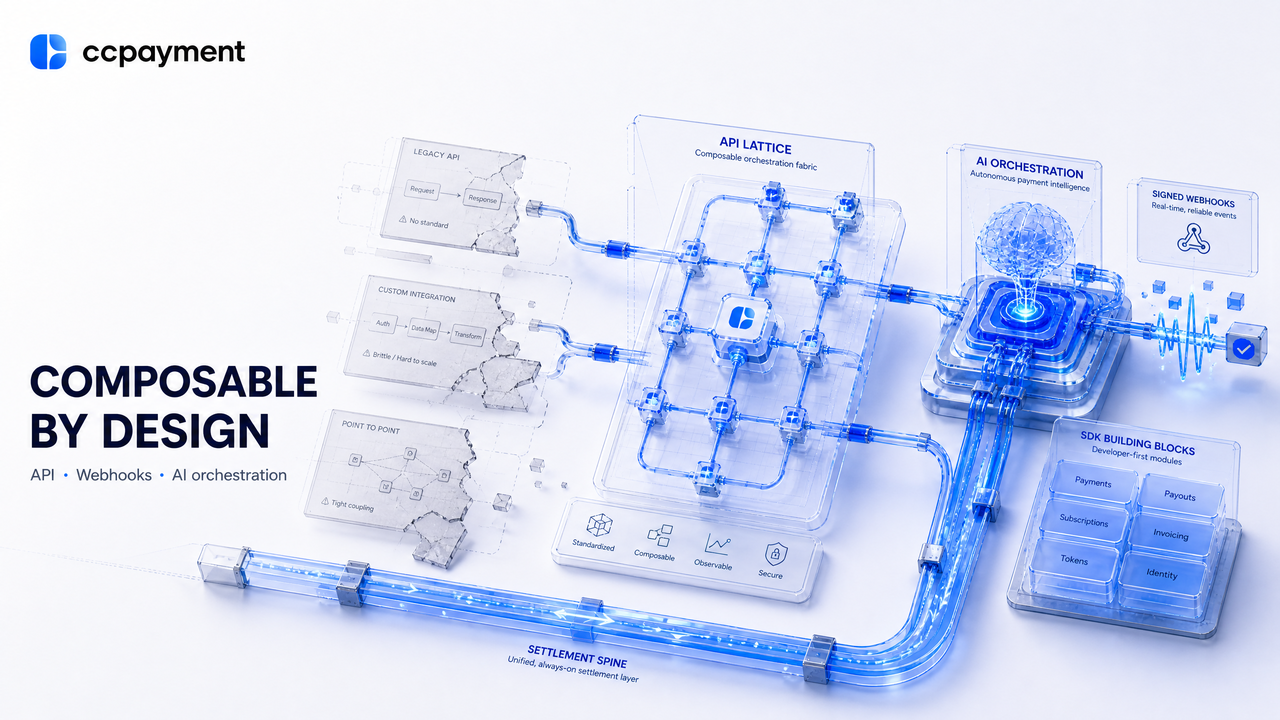
Instead of stitching together separate services for collections, reusable deposit addresses, withdrawals, and Webhooks, developers can manage those flows through CCPayment’s unified API layer. Its AI-ready API resources and machine-readable SKILL.md help AI coding assistants understand your integration, so developers can build faster.
BitPay: best for fiat settlement and structured payment programmes
BitPay is an established choice for online crypto payments, invoicing, payroll, affiliate settlements, and crypto payouts, with fiat, crypto, or mixed settlement options. It is a sensible shortlist candidate for finance-led teams that prioritise bank settlement.
If your roadmap depends on permanent addresses, wallet-oriented architecture, and merchant-led multi-chain payout orchestration, validate those requirements directly during procurement rather than assuming a checkout implementation will cover them.
Coinbase Business: best for straightforward API checkout
Coinbase Business Checkout APIs create embeddable, single-use checkout URLs with real-time Webhooks and refunds. It is a clear option for defined orders, invoices, ticketing, and similar transaction-level use cases.Teams that also need reusable addresses, merchant-level batch payouts, or multi-asset treasury workflows should assess those needs beyond a checkout API.
For a broader market comparison, see Most Reliable Crypto Payment Gateways for Merchants in 2026.
Why Choose CCPayment Over CoinPayments?
A developer-friendly enterprise crypto payment API
For developers, an API matters when it maps to the payment architecture you need to ship.
The CCPayment Payment API gives developers one REST-based integration for supported deposits, withdrawals, wallets, transaction queries, and Webhooks.
CCPayment also provides AI crypto payment integration resources, including a machine-readable SKILL.md. Developers can add this file to a compatible AI coding assistant so it can reference CCPayment's authentication, API workflows, Webhook handling, and error patterns while helping write or review integration code.
This does not remove the need for testing or security review. It does reduce the time developers spend searching documentation and repeatedly explaining the payment flow to their coding tools.
Crypto Batch Payout Solution for Up to 500 Orders
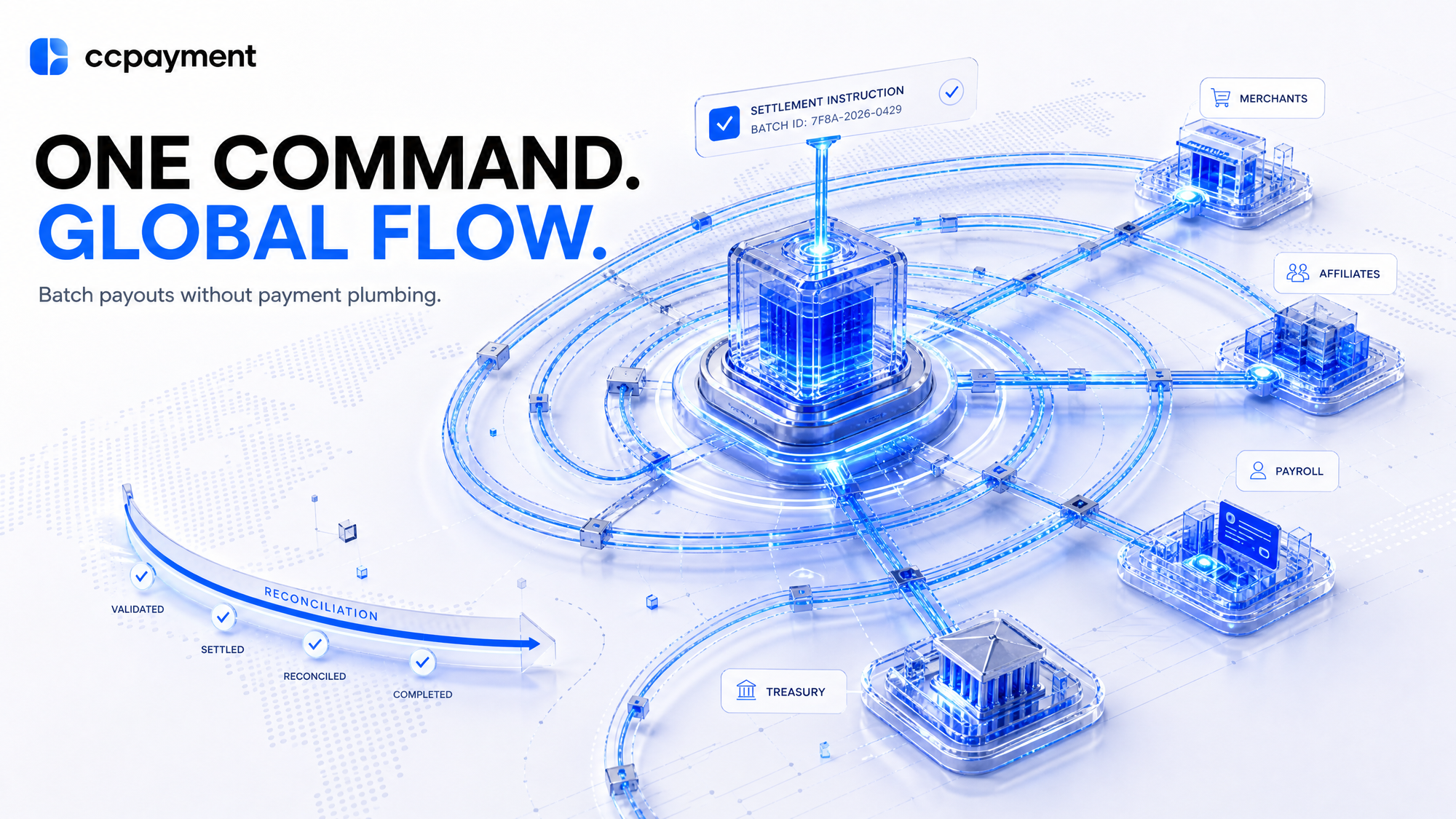
CCPayment supports merchant-level batch withdrawals, together with address-validity checks, network-fee queries, and payout records.
Instead of manually assembling each approved payout, teams can submit a batch request, retain their own approval controls, and track returned records through the payout lifecycle. That can turn affiliate commissions, supplier settlements, payroll, and merchant withdrawals into a controlled workflow.
Automated stablecoin settlement, KYT, and treasury control
Crypto payments avoid card-network chargebacks, but source-of-funds risk still needs to be managed. CCPayment applies KYT screening to incoming transactions.This helps protect the normal operating balance from potentially high-risk funds.
Merchants that accept volatile assets can use Auto-Swap to convert selected payments into USDT or USDC. Eligible merchants that need fiat liquidity can separately sell USDT and receive USD through SWIFT.
CCPayment dashboard gives operations and finance teams a central view of balances, deposits, withdrawals, fees, swaps, and settlement records. Transaction exports and accounting records make it easier to match platform activity with an internal ledger without relying on blockchain explorers for routine reconciliation.
How to Replace CoinPayments Without Rebuilding Your Payment Flow
The API structures are different, but the core migration flow will be familiar to teams already processing crypto payments.
Map the current flow:
Choose the equivalent CCPayment payment models.
Connect APIs and Webhooks:
Map internal users and order IDs to CCPayment references, verify Webhook signatures, and use idempotent logic to prevent duplicate credits.
Test and roll out gradually:
Enable the ETH Test Network in the CCPayment dashboard, test deposits, withdrawals, and Webhooks, then begin with limited production volume before completing the switch.
Ready to Replace CoinPayments?
Whether you are migrating to an existing integration or building a new payment stack, CCPayment gives Web3 businesses a modern path beyond a basic crypto checkout.
👉 Get API access
👉 Talk to enterprise sales
👉Test in ETH Test Network
FAQ
Q1: Is CCPayment a direct drop-in replacement for CoinPayments?
A: Functionally, yes. CCPayment covers common CoinPayments use cases, including crypto collection, deposit addresses, wallet management, withdrawals, and transaction notifications. The API structures differ, so there's a remapping process, but CCPayment's integration team provides migration support and ETH Test Network lets you test before going live.
Q2: What coins and chains does CCPayment support?
A: CCPayment supports 900+ cryptocurrencies across major chains including Ethereum, BNB Chain, Tron, Solana, Polygon, and more. This includes all major stablecoins (USDT, USDC, USDE) across networks — a material upgrade from legacy gateways with 10–20 coin support.
Q3: What's the typical integration timeline for switching from CoinPayments?
A: Technical migration is straightforward. CCPayment’s API integration requires just two steps: generate your App Secret, then integrate via API documentation or import our SKILL.md directly into your AI coding assistant. No custom middleware, no complex migration scripts. If you're already processing crypto payments programmatically, you can complete the integration in a single development cycle.
Q4: Can CCPayment support AI agent-driven payment workflows?
A: Yes, CCPayment's AI payment infrastructure is built to support autonomous payment agents, including API key scoping for agent access and structured Webhook responses that AI systems can parse natively.
Q5: We run a high-volume iGaming platform. Can CCPayment handle affiliate payouts at scale?
A:Yes. One batch withdrawal request can contain up to 500 sub-orders. Merchants can use it for affiliate payments, player withdrawals, vendor settlements, payroll, and other bulk disbursements.
Q6: Is there a test environment I can use before committing?
A: Yes. CCPayment supports ETH Test Network, which lets developers test full payment flows, including payouts and Webhooks, without real funds. Recommended first step before any production integration.
Crypto Adoption for Business 2026
Deep dives into Web3 payments, industry trends, and how to scale your global commerce with zero-code integrations.