iGaming Crypto Payment Playbook: How Stablecoins Eliminate Chargebacks & Boost Margins
Legacy card schemes & SWIFT delays drain iGaming margins. Moving to a stablecoin gateway is the 2026 playbook to permanently eliminate chargebacks, unlock instant 24/7 VIP payouts, and cut fees to ~0.2%. Claim your $5k zero-fee quota and upgrade your stack today!

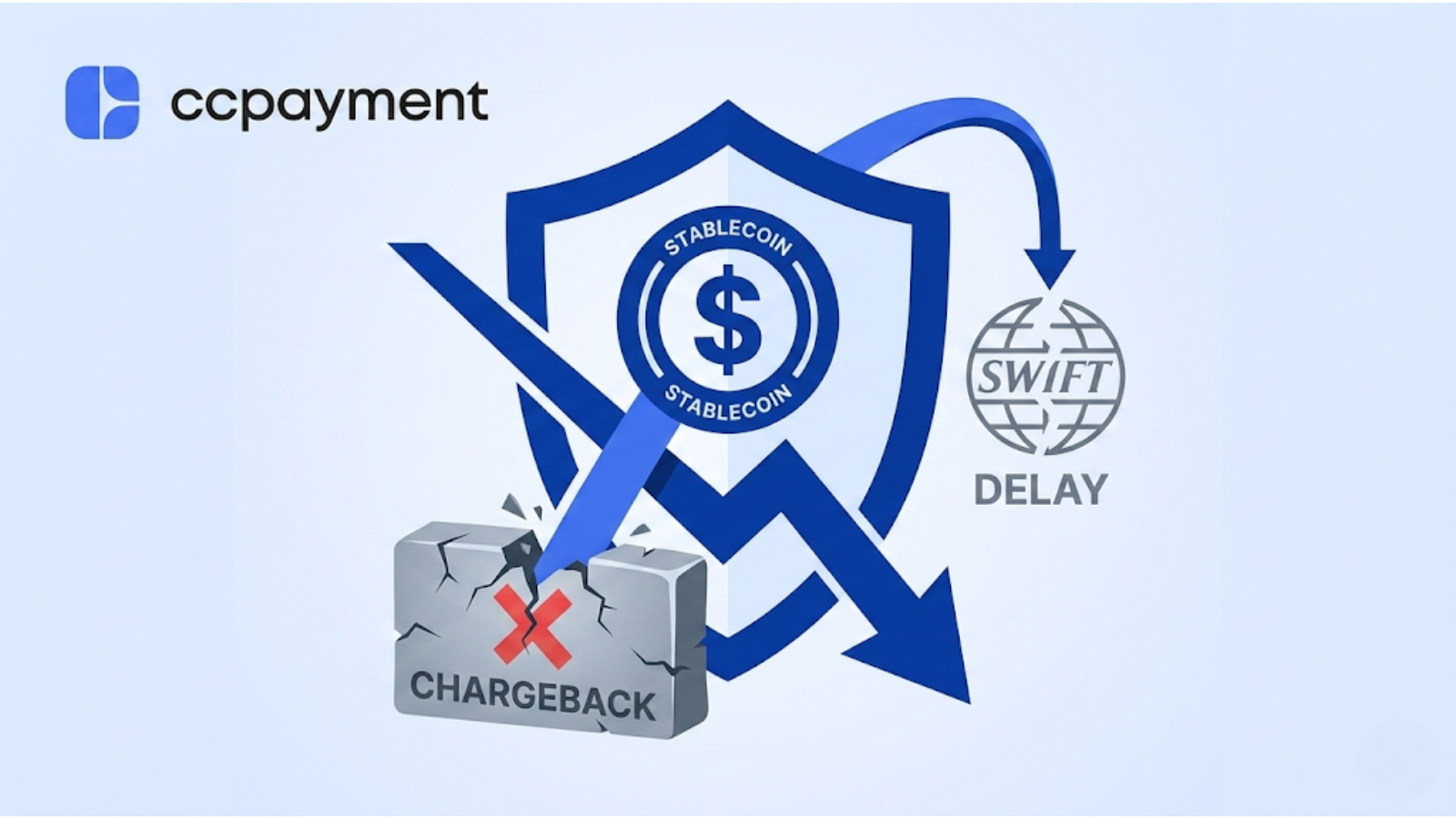
Stop letting legacy payments drain your profits.
- The Problem: Traditional card schemes and SWIFT delays cost iGaming operators millions in "friendly fraud" and T+5 liquidity traps.
- The Solution: Integrating a modern iGaming crypto payment gateway permanently eliminates chargebacks (100% guarantee), enables 24/7 instant VIP payouts, and slashes processing fees to ~0.2%.
- The Action: Claim your $5,000 zero-fee processing quota today and upgrade your casino’s payment stack for 2026.
In the high-stakes, hyper-competitive world of global iGaming, your fiercest opponent isn't necessarily a rival operator, it is the legacy payment infrastructure.
For decades, casino operators and sportsbooks have accepted high transaction friction, multi-day SWIFT settlement delays, and punishing chargeback rates as the unavoidable "cost of doing business." But as we navigate deeper into 2026, the financial paradigm has fundamentally shifted. Relying on traditional high-risk payment processing is no longer a sustainable strategy; it is a direct drain on your bottom line.
If you follow the latest industry discourse, such as the highly anticipated iGaming Stablecoin Playbook webinar hosted by SBC and Rapyd, the top-tier consensus is crystal clear: the future of iGaming profitability relies on moving beyond legacy card schemes and adopting decentralized, programmable money.
Integrating a modern iGaming payment gateway tailored for stablecoins is no longer an experimental tech upgrade; it is a critical strategic maneuver to protect your bottom line. By combining stablecoin infrastructure with the correct automated settlement architecture, operators are unlocking exponential profit growth.
Whether you are a Casino CEO, a Sportsbook CFO, or a Payments Director, this is your definitive playbook on how to mitigate chargebacks, bypass legacy SWIFT delays, and establish a highly lucrative, compliant technical closed-loop.
Eradicating "Friendly Fraud" & Chargebacks in iGaming
For iGaming finance teams, traditional card networks (Visa, Mastercard) present a hostile and heavily penalized environment. The sector is notoriously plagued by "friendly fraud," a loophole that actively punishes operators.
The Anatomy of the Chargeback Spiral
The scenario is universally dreaded yet all too familiar: A player deposits $5,000 via credit card, loses their bets over the weekend, and suffers from buyer's remorse. On Monday morning, they call their issuing bank and initiate a dispute, falsely claiming the transaction was "unauthorized."
Because traditional high-risk payment processing structurally favors the consumer, the operator almost always loses the initial $5,000. But the bleeding doesn't stop there. The operator is also slapped with a non-refundable dispute fee. Worse still, if your chargeback ratio creeps anywhere near the dreaded 1% threshold, acquiring banks impose draconian measures. They will drastically inflate processing fees and lock up 10% to 15% of your working capital in "rolling reserves" for up to six months, severely crippling your liquidity.
The Stablecoin Advantage: 100% Settlement Finality
The most effective solution to this cash-flow drain isn't better dispute software; it is eliminating the possibility of chargebacks entirely.
When a player deposits funds using a stablecoin (like USDT or USDC) via an iGaming crypto payment gateway, the transaction is cryptographically verified on-chain.
By the fundamental mathematical design of blockchain technology, these transactions provide 100% settlement finality. They are strictly one-way and irreversible.By transitioning to this Web3 architecture, you permanently eradicate the operational burden of dispute management. The revenue you earn stays securely in your treasury, crushing rolling reserve requirements, and allowing your risk team to focus on actual platform security rather than fighting unwinnable credit card disputes.
Bypassing SWIFT: Ending the T+5 Liquidity Trap
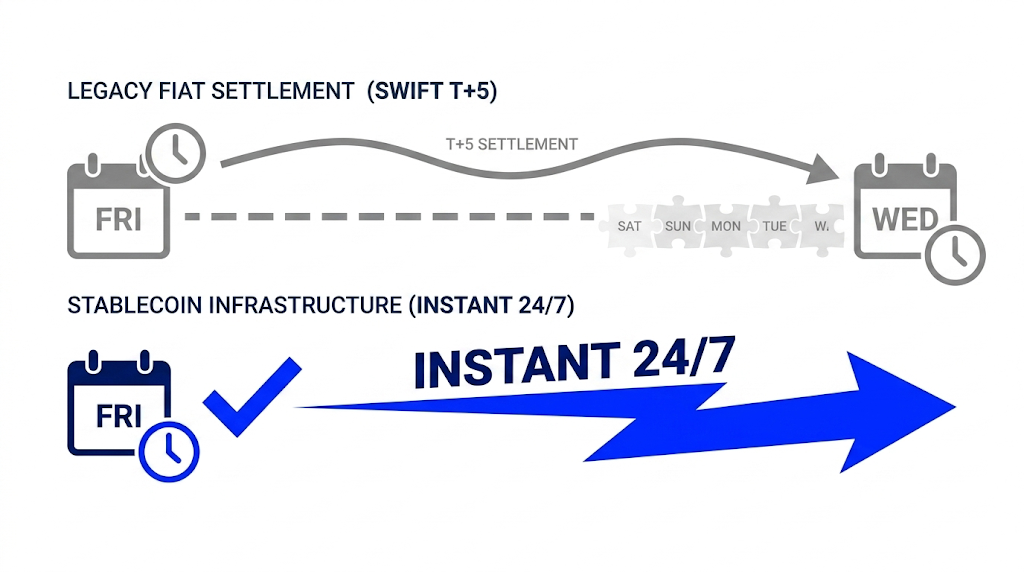
In the fast-paced iGaming sector, liquidity velocity is everything. However, traditional global iGaming payment processing relies on the fragmented SWIFT correspondent banking network—an archaic system built for the 1970s, not the 24/7 digital age.
Solving the VIP Player Payout Problem: The Demand for Instant Withdrawals
Consider the player experience: Payout speed is arguably the primary driver of player retention and lifetime value (LTV). When a VIP player hits a massive jackpot on a Friday night, they expect their winnings promptly. If your platform relies on traditional cross-border wire transfers, that payout hits the "fiat holiday trap." Due to weekend gaps, asynchronous global bank holidays, and manual compliance checks, a Friday withdrawal might not clear the player's account until the following Wednesday.
This multi-day delay severely frustrates players, erodes trust, and inevitably drives them directly into the arms of competitors who offer instant crypto casino payouts.
24/7/365 Instant Cross-Border iGaming Settlements
To optimize operational efficiency and skyrocket player retention, platforms must move beyond SWIFT. Stablecoins act as borderless digital dollars that settle 24 hours a day, 7 days a week, 365 days a year.
By utilizing a stablecoin payment infrastructure, player deposits are verified and settled into your corporate treasury in a matter of seconds. Conversely, offering near-instant, weekend-proof crypto payouts builds immense trust with your high-rollers. For the CFO, bypassing the SWIFT network means minimizing trapped liquidity in transit, providing immediate access to working capital to fund marketing campaigns without geographical friction.
The Margin Multiplier: Escaping Legacy Card Scheme Taxes
Traditional high-risk payment processors impose a heavy "tax" on the iGaming ecosystem. Escaping this tax—and capturing previously blocked revenue, is one of the most direct routes to increasing your top-line profitability.The Hidden Costs of High-Risk iGaming Merchant Accounts When relying on legacy fiat rails, operators face a compounded and punitive fee structure:
- Acquiring Bank Fees: Premium penalty rates applied simply for operating under high-risk MCC (Merchant Category Codes).
- Card Scheme Fees: Unavoidable assessment fees paid to global network providers.
- FX Markups: Hidden 2% to 4% spreads applied to international players depositing in local fiat currencies.
In total, operators often bleed 3% to 6% of their gross deposit volume just to process the payment.
Rescuing Revenue from "False Declines" in Emerging Markets
Beyond exorbitant fees, legacy card networks silently destroy your margins through "false declines." In high-growth iGaming markets (like LATAM or Southeast Asia), issuing banks employ aggressive risk algorithms that often block up to 50% of legitimate credit card deposits. You spend thousands on marketing to acquire a player, only to lose them at the cashier page due to poor deposit approval rates.
Web3 iGaming gateways bypass these local bank blocks completely. Because stablecoin transactions are decentralized and peer-to-peer, you guarantee a near 100% deposit approval rate, instantly reclaiming massive amounts of "lost" revenue.
The Web3 Payment ROI: Slashing Processing Fees
By transitioning even a segment of your user base to digital assets, you bypass these legacy bottlenecks entirely. Let’s look at the projected math for an operator with a $10 Million Monthly Processing Volume (MPV):
- Traditional High-Risk Processing (Avg. 4% fee): $400,000 lost to fees per month.
- Web3 Stablecoin Processing (Avg. 0.2% fee): $20,000 in fees per month.
- Projected Net Profit Reclaimed: $380,000 per month (over $4.5 million annually!) Note: This calculation does not even include the exponential revenue captured from eliminating chargebacks and false declines.
By facilitating direct digital dollar transfers, stablecoin transactions cost fractions of a percent to process, allowing operators to reclaim substantial profit margins on every single deposit.
Seamless Integration & Silent Compliance (AML/KYT)
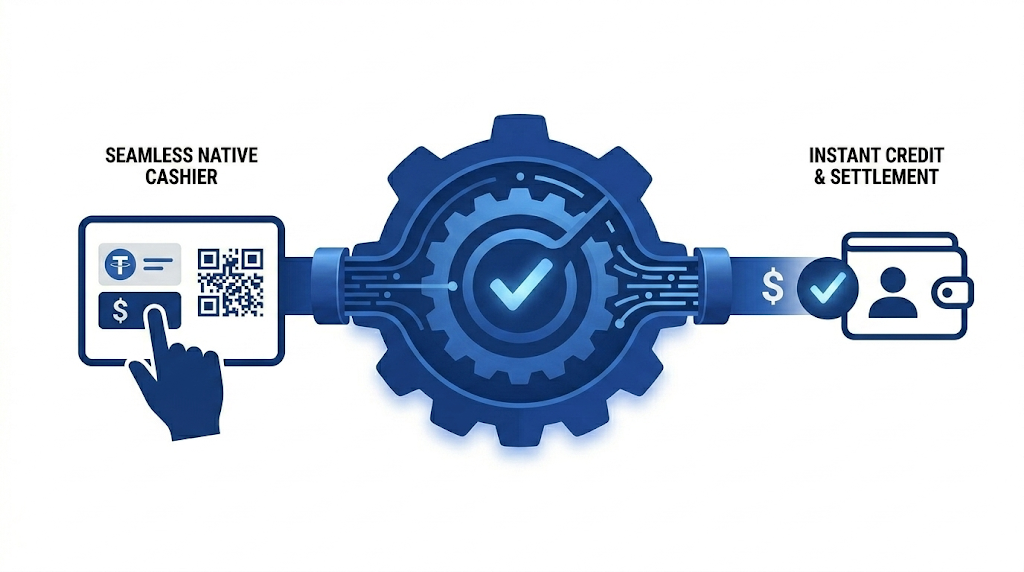
A common misconception among legacy operators is that an iGaming crypto integration requires rebuilding their entire cashier system or hiring a team of blockchain engineers. In 2026, the technology has matured into an elegant, plug-and-play solution.
A modern iGaming crypto payment gateway provides a technical closed-loop that requires minimal development resources from your team:
Building a Frictionless Crypto Cashier UI
- Native Cashier Integration: The crypto payment option sits seamlessly alongside your traditional credit card and e-wallet methods. Players simply select crypto, choose their preferred asset (like USDT), and scan a dynamic QR code. They never leave your platform's ecosystem.
- Auto-Conversion Engine: Volatility is the enemy of casino accounting. Premium gateways instantly lock in exchange rates. If a player deposits a fluctuating asset, the engine automatically converts the incoming funds into a fiat-pegged stablecoin, protecting your treasury from market swings.
- Automated Reconciliation: The moment the blockchain verifies the funds, the gateway fires an instant webhook to your backend, automatically crediting the player’s casino wallet in their local fiat value.
The Compliance Shield: Automated AML/KYT for iGaming
Enterprise crypto gateways are built with "Silent Compliance" in mind. Embedded directly within the API settlement flow is a Real-Time KYT (Know Your Transaction) module. In the milliseconds before a deposit is credited, the system scans the blockchain history of the incoming funds. If the funds originate from a sanctioned entity, the system isolates the transaction, ensuring your platform adheres to global iGaming AML compliance standards without ever interrupting the legitimate user experience.
The VIP Deposit Breakdown: Legacy vs. Web3 Payments
(The following table illustrates the dramatic financial impact of processing a standard $10,000 VIP deposit.)
Financial Impact Snapshot: Processing a $10,000 VIP Deposit
| Transaction Phase | Legacy Card Network (Before) | Modern Stablecoin Gateway (After) |
|---|---|---|
| Processing Fee Deducted | Loses ~$400 - $600 (4%+ fee & FX spreads) | Loses only $20 (0.2% flat rate) |
| Capital Locked (Rolling Reserve) | $1,000 - $1,500 frozen for up to 6 months | $0 (100% of funds instantly available) |
| Chargeback Risk Exposure | High (Vulnerable to "Friendly Fraud") | Zero (Blockchain cryptographic finality) |
| VIP Payout Speed | 3 to 5 business days (Frustrates players) | Under 60 seconds (Boosts retention) |
| Resulting Operator Value | Squeezed margins, delayed liquidity | Maximum margin, instant cash flow |
Conclusion & Exclusive Offer: Upgrade Your iGaming Payment Stack Today
The winning formula for the iGaming industry in 2026 is undeniable: Stablecoins + Automated Settlement = Exponential Profit Growth. By moving beyond legacy card schemes and the archaic SWIFT network, operators can eliminate chargebacks, drastically lower payment processing costs, and provide the instant liquidity that VIP players demand.
Are you ready to test a frictionless, zero-chargeback payment environment?
CCPayment’s 2026 iGaming Merchant Incentive is now live! Register today to claim your exclusive $5,000 Zero-Fee Processing Quota. Experience the power of stablecoin settlements completely risk-free, and lock in the industry’s most competitive processing rate of just 0.2% thereafter.
👉 [Claim Your Zero-Fee Quota & Integrate CCPayment Today]
FAQ
Q1: Will adding a crypto gateway confuse our traditional, non-technical players?
A: Not at all. Integrating an iGaming crypto gateway is a 100% additive revenue strategy. Your existing fiat rails (credit cards, e-wallets) remain completely unaffected. The Web3 cashier simply sits seamlessly alongside them as a premium, alternative checkout method. This allows you to capture the rapidly growing demographic of high-value players who prefer digital assets, without introducing any friction to your traditional user base.
Q2: How does our finance team handle accounting for decentralized payments?
A: Seamlessly and without volatility. Because our gateway automatically converts incoming crypto deposits into fiat-pegged stablecoins (such as USDC or USDT), these assets map cleanly as a 1:1 US Dollar equivalent in your existing ERP systems. With automated fiat-value reconciliation, downloadable CSV reports, and robust API endpoints, your monthly treasury reporting remains highly predictable.
Q3: Are stablecoin settlements compliant for licensed iGaming operators?
A: Absolutely. Top-tier enterprise gateways are engineered to satisfy strict global iGaming regulatory frameworks (including emerging standards like MiCA). By utilizing fully audited, fiat-backed stablecoins and embedding real-time KYT (Know Your Transaction) and AML scanning directly into the settlement flow, operators can process digital assets safely while fully aligning with their licensing authorities' compliance mandates.
Q4: Do we need to hire blockchain engineers or a Web3 treasury team?
A: No specialized expertise is required. A modern stablecoin gateway abstracts away all the technical complexities of blockchain nodes and private key management. Your existing finance team can manage everything through an intuitive merchant dashboard, easily initiating instant VIP payouts or routing stablecoins directly to your corporate fiat bank accounts with just a few clicks.
Q5: Will integrating a Web3 payment gateway cause platform downtime or take months to build?
A: Zero downtime. Rapid deployment. Deploying a modern Web3 iGaming payment gateway is designed to be plug-and-play. Because the APIs utilize standard REST architecture and clean JSON payloads, your existing development team—often accelerated by AI coding assistants like GitHub Copilot, can complete the integration in a matter of days, not months. You instantly upgrade your payment stack with zero operational disruption.