Best Stripe Alternatives in 2026: Why Global Merchants Are Moving to Crypto Rails
⏱️ TL;DR: Stripe is still a strong card processor. But when international fees, chargebacks, and reserves start cutting into margins, another card processor may not solve enough. Crypto gives global merchants a second payment rail, and CCPayment is built to make that rail practical.

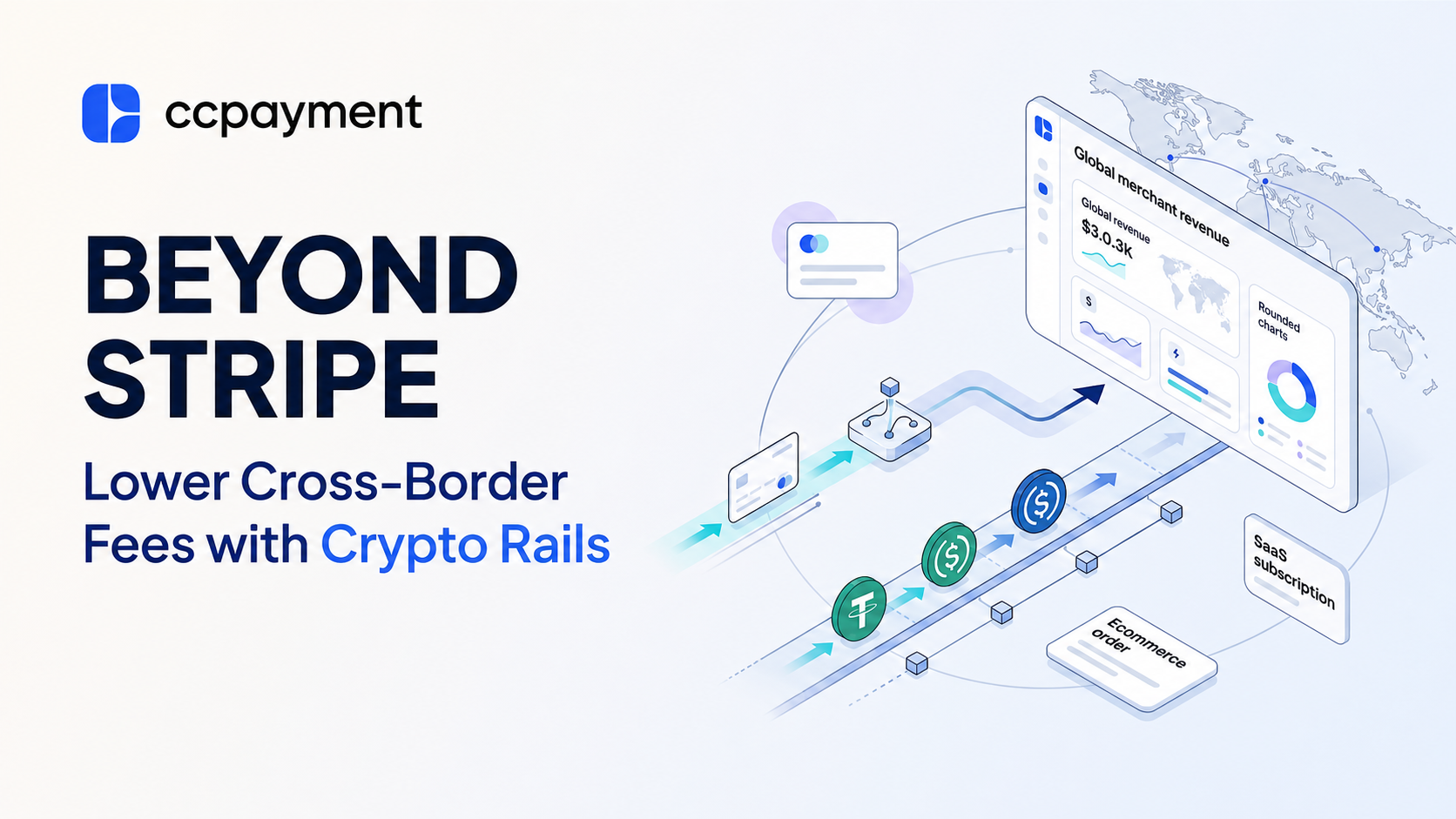
Stripe is still one of the best products for accepting cards, managing subscriptions, and getting an online business to market. If better card acquiring is the goal, platforms such as Adyen deserve a serious look. If cross-border costs and chargebacks are the real problem, changing card processors may not go far enough.
That distinction matters for cross-border ecommerce sellers, SaaS companies, and digital service providers. They are not all leaving Stripe. Many are keeping cards for mainstream buyers and adding crypto for customers who already hold digital assets.
The Real Cost Appears After Checkout
Stripe's US pricing page lists 2.9% + $0.30 for a successful domestic card payment, plus 1.5% for an international card and 1% when currency conversion is required. Under those standard rates, a $10,000 international payment involving currency conversion would cost about $540.30.
The same $10,000 payment through CCPayment would carry a $50 gateway fee at the standard 0.5% deposit rate, or $20 at the highest monthly-volume tier of 0.2%. Network and conversion costs may still apply, and cards offer access to a much larger mainstream audience. Even with that context, the difference is hard to ignore on a high-ticket sale.
A Card Payment Is Not Always Final
A successful card payment can turn into a chargeback weeks later. The merchant may lose the revenue after the product, annual SaaS plan, advertising credit, or digital service has already been delivered. Stripe also lists a $15 dispute fee, subject to exclusions.
For high-ticket ecommerce and SaaS, one dispute can erase the margin from several clean sales. Confirmed blockchain payments work differently: a card issuer cannot pull the funds back. The merchant can still issue a refund and must still handle legitimate complaints, but the payment is not exposed to card-network chargebacks.
Reserves and payout holds create a second cash-flow problem. Traditional processors may restrict part of a merchant's balance to cover expected refunds, disputes, or elevated risk. Those controls have a purpose. They also make revenue less predictable when a business is growing quickly.
Better Card Processing or a Different Rail?
The best Stripe alternative depends on what the merchant actually wants to change.
| Provider | Main strength | Cross-border cost model | Chargeback exposure | Best fit |
| CCPayment | Multi-chain crypto settlement | 0.2%–0.5% deposit fee by monthly volume, plus applicable network or conversion costs | No card-network chargebacks on confirmed payments | Global ecommerce, SaaS, and digital services |
| Stripe | Developer tools and subscriptions | Card rate plus international and FX fees | Card chargebacks apply | Mainstream ecommerce and SaaS |
| Adyen | Enterprise acquiring | Interchange++ and payment-method costs | Card chargebacks apply | Large multinational merchants |
| PayPal | Familiar consumer wallet | Varies by product, market, and currency | Claims and chargebacks may apply | Consumer-facing online sales |
Adyen can improve card acquiring through local processing, Interchange++ pricing, and enterprise infrastructure. PayPal adds a wallet that millions of consumers already recognize. Both can be valuable. The card network, and its chargeback model still sits underneath the transaction.
Stripe itself now supports stablecoin payments in eligible markets, so the decision is no longer simply between Stripe and crypto. Merchants should also compare asset and network coverage, pricing, settlement options, payouts, and treasury capabilities.
For merchants that need broader multi-chain acceptance and crypto-native payment infrastructure, a dedicated crypto gateway changes more than the provider. It changes the payment route itself. That is the meaningful difference in crypto payment gateway vs. Stripe comparison.
Where Crypto Rails Earn Their Place
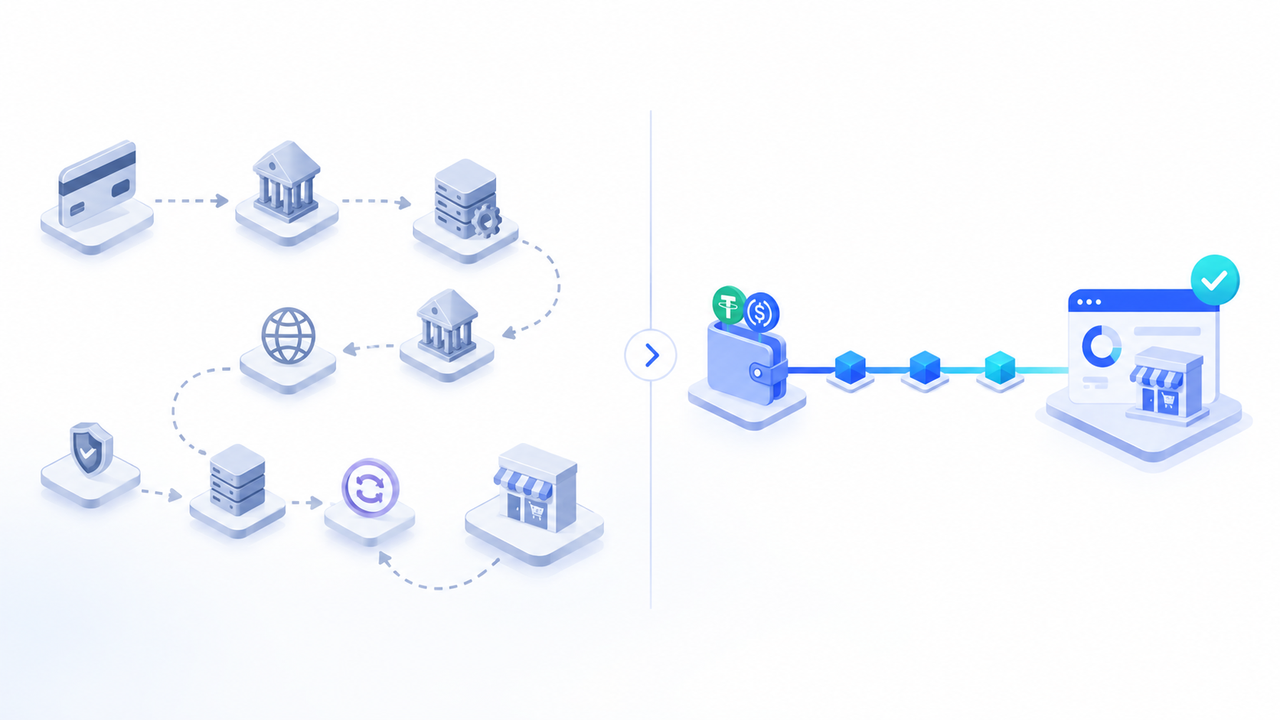
Blockchain networks operate around the clock rather than following corresponding bank hours. Confirmation time depends on the asset, network conditions, and the merchant's requirements, but stablecoins can move internationally without the same chain of issuers, acquirers, and card-network currency conversion.
The option is especially useful in Latin America and Southeast Asia, where a customer may hold USDT or USDC but lack a card that works reliably for a high-value international purchase. Crypto will not replace every local payment method. It can recover sales that a card-only checkout cannot serve.
A hybrid rollout is straightforward. The store keeps displaying prices in fiat. At checkout, crypto customers receive a payment request, while everyone else stays in the existing card flow. Once the blockchain payment is confirmed, a webhook connects it to the relevant order or customer account. The merchant can test demand without rebuilding the entire payment stack.
What CCPayment Changes in Practice
CCPayment supports 900+ cryptocurrencies across 100+ blockchain networks, including USDT and USDC. It was also named Best Crypto Payment at the 2024 SiGMA Europe B2B Awards.
The customer pays with an asset and network enabled by the merchant. CCPayment monitors the transaction and sends its status through a webhook. The merchant can keep the received asset, convert selected cryptocurrencies into USDT or USDC, or use USD settlement when fiat is needed. This keeps volatile assets out of the operating treasury without forcing every payment through a card-and-bank route.
Integration can match the business model. An ecommerce store can use hosted checkout or a WooCommerce plugin. A SaaS platform can create an order-linked payment request and activate access after confirmation. Platforms with recurring users can assign permanent deposit addresses and reconcile payments with their own customer references. The same API also supports withdrawals and broader treasury workflows.
CCPayment is not a route around compliance. Merchant onboarding and transaction screening still apply, and a business searching for a high-risk payment gateway should expect its industry and operating model to be reviewed. The advantage is more precise: clean, confirmed crypto revenue is not held against a future cardholder chargeback.
Stripe Does Not Need to Disappear
Adyen is a strong choice when the priority is enterprise card acquiring. PayPal can add a familiar wallet. CCPayment fits merchants that want to lower cross-border payment fees, reach crypto-ready customers, and settle revenue in stablecoins.
The practical move is often to keep Stripe and add CCPayment as a second rail. Customers get another way to pay; the finance team reduces dependence on card infrastructure; and the existing checkout does not need to be torn apart.
Ready to compare the numbers for your business? Talk to the CCPayment team about your payment volume and settlement needs, or review the API documentation to see how crypto can fit into your current stack.
Fees, eligibility, and product availability can change. Check each provider's current terms before making a decision.
FAQ
Q1: What is the best Stripe alternative in 2026?
A: CCPayment is a strong Stripe alternative for businesses that need multi-chain crypto payments, stablecoin settlement, and global payout capabilities.
Q2: Can crypto payments be charged back?
A: Confirmed on-chain payments cannot be reversed through a card issuer. Merchants can still issue refunds under their own policies.
Q3: Can SaaS businesses accept stablecoin payments?
A: Yes. A SaaS platform can create a payment request through an API or hosted checkout and update customer access after confirmation.
Q4: Do customers need a CCPayment account to pay?
A: No. Customers can connect a compatible wallet, scan a QR code, or send funds to the displayed address. They do not need a CCPayment account to complete the payment.
Q5: Can one CCPayment account manage multiple brands or stores?
A: Yes. Operators can manage multiple merchant accounts under one login, making it easier to separate brands and monitor each store's orders and asset flows.
Crypto Adoption for Business 2026
Deep dives into Web3 payments, industry trends, and how to scale your global commerce with zero-code integrations.