

The 2026 SaaS Checkout Crisis: Slashing 70% Abandonment Rates with Native Crypto APIs
Share
The Invisible Barrier to Global MRR
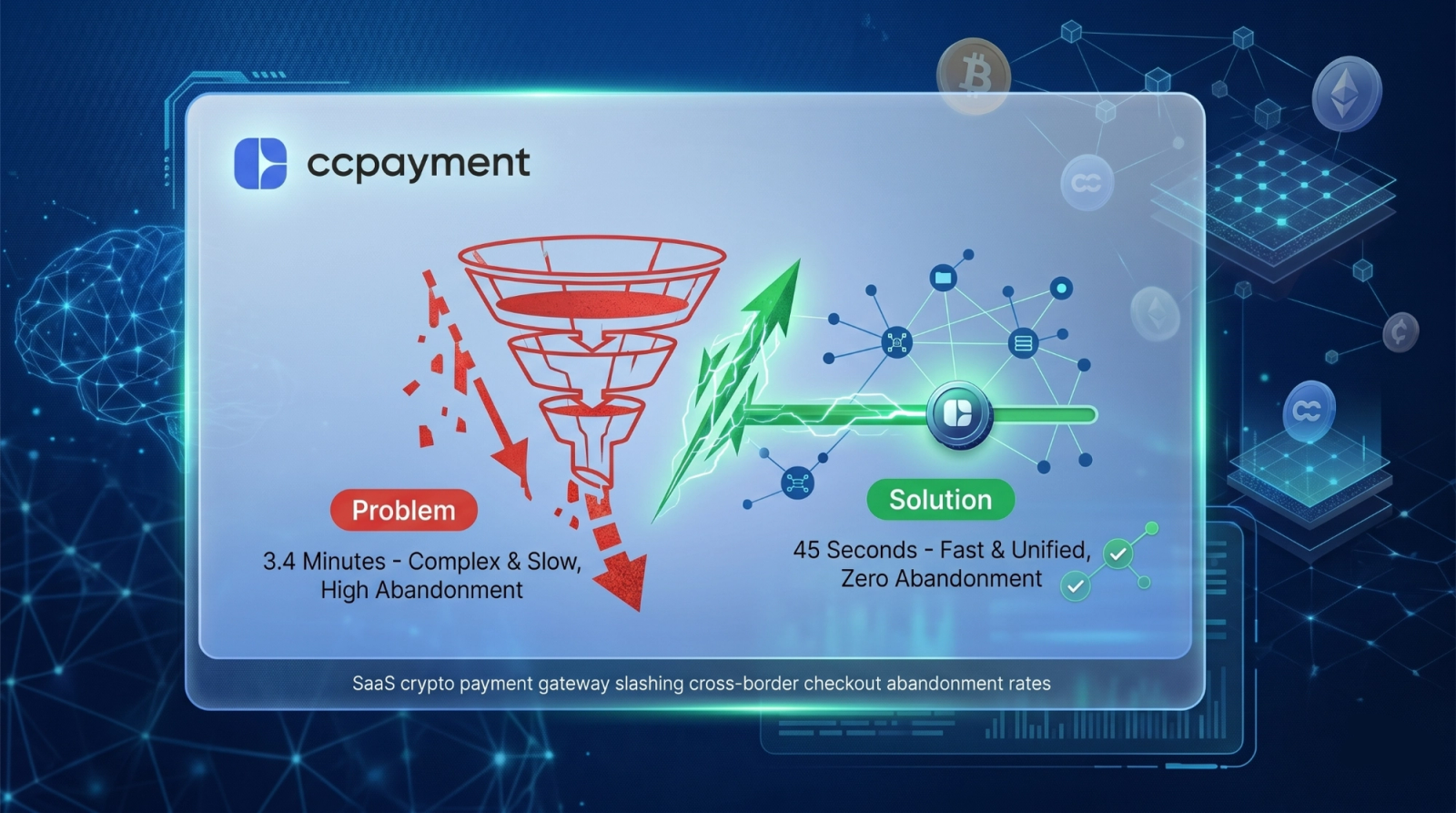
The Invisible Barrier to Global MRR
Your marketing team just spent thousands of dollars in Customer Acquisition Cost (CAC) to drive a high-intent global lead to your SaaS pricing page. The user clicks "Subscribe"—only to hit a false decline from a legacy bank. Your Monthly Recurring Revenue (MRR) vanishes instantly.
According to the comprehensive Cart Abandonment Statistics 2026 by Digital Applied, the average checkout abandonment rate remains stubbornly high at 70.19%. Traditional payment rails are fundamentally failing global SaaS expansion. Let's explore how to plug this massive funnel leak.
The 204-Second Maze — Why Fiat Causes a 70.19% Abandonment Rate (2026 Data)
Why do highly motivated users abandon their subscriptions at the very last second? The Digital Applied report reveals a hard truth: 22% of users abandon carts simply because the "checkout is too slow or complicated."
When a global customer tries to buy your software, traditional ACH or cross-border credit card processing takes an agonizing 3, 4 minutes on average. This delay is not random; it is the visible symptom of a fragmented, legacy financial system. This 204-second user maze includes redirecting to clunky banking portals, waiting for delayed SMS OTPs, and battling rigid fraud filters.
Furthermore, in the realm of cross-border SaaS, "false declines" (legitimate transactions blocked by overzealous bank algorithms) often spike to 15% or higher.
But the friction doesn't end with the user. Even when a fiat transaction is approved, merchants still face operational hurdles. As highlighted in recent industry insights on using APIs to scale global commerce in 2026, cross-border commerce is increasingly moving away from legacy banking rails that can take up to 72 hours to clear. The narrative has shifted: money is increasingly being treated as programmable data.
Forward-thinking SaaS leaders are diversifying their payment stacks to reduce reliance on legacy fiat rails for international subscriptions.
Instead, they are adopting robust Crypto Payment APIs that serve as a vital financial bridge between decentralized assets and traditional bank settlements.
Because blockchain transactions rely on cryptographic verification rather than centralized credit scoring, they offer a highly effective way to bypass many traditional banking bottlenecks. By integrating this technology, SaaS businesses can drastically reduce false declines and help mitigate the massive annual drain caused by chargeback fraud. By shifting toward deterministic blockchain verification, you significantly minimize the friction that kills conversions and scale your global reach more efficiently.
Native Embedded Checkout — Killing the Redirect for a 45-Second Close
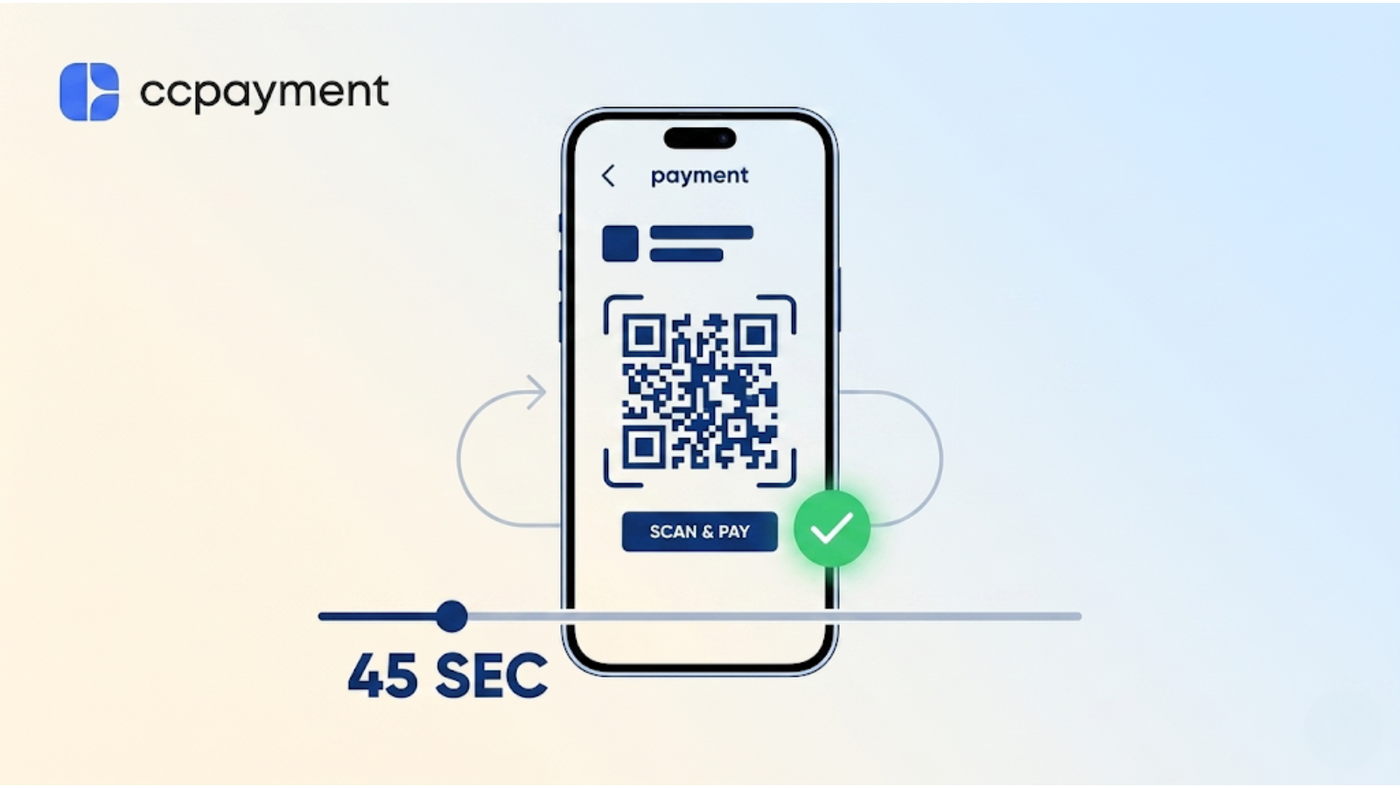
Mobile commerce now represents the vast majority of global traffic, yet the data from Digital Applied highlights a massive 12.2 percentage point mobile abandonment gap (76.98% on mobile vs. 64.78% on desktop). The primary culprit? A staggering 19% of users cite the difficulty of entering complex payment details on small screens.
Early crypto payment gateways inadvertently exacerbated this issue. They functioned merely as "third-party portals," forcing users to click a payment button, leave the secure environment of the SaaS application, and land on a disjointed, unfamiliar external invoice page. For a high-ticket B2B client evaluating a premium software tool, this redirect breaks the brand promise. It feels jarring and often triggers security anxieties. In a world where UI/UX is a competitive moat, redirecting your customer away from your app to pay introduces unnecessary friction.
However, in 2026, B2B merchants no longer want a third-party checkout portal; they demand payment capabilities that act as a silent, embedded infrastructure. A modern cross-border billing API resolves this structural flaw through a Native Embedded Checkout.
By utilizing an API-first approach, the payment UI lives entirely within your SaaS application. It feels as native and frictionless as a top-tier Stripe checkout, matching your CSS, typography, and branding flawlessly. There are no redirects and no jarring URL changes. Users simply stay on your pricing page to scan a dynamic QR code or use a one-tap deep-link wallet connection. This architectural shift from an external "Portal" to internal "Infrastructure" drastically compresses the checkout time from 3, 4 minutes to roughly 45 seconds, significantly reducing the primary triggers of mobile abandonment.
(This seamless, redirect-free experience is the exact design philosophy behind our own checkout architecture, ensuring that the buyer maintains visual continuity and trust throughout the transaction.)
1:1 Stablecoin Settlement — Bypassing the 15% "False Decline" Trap and Protecting Margins
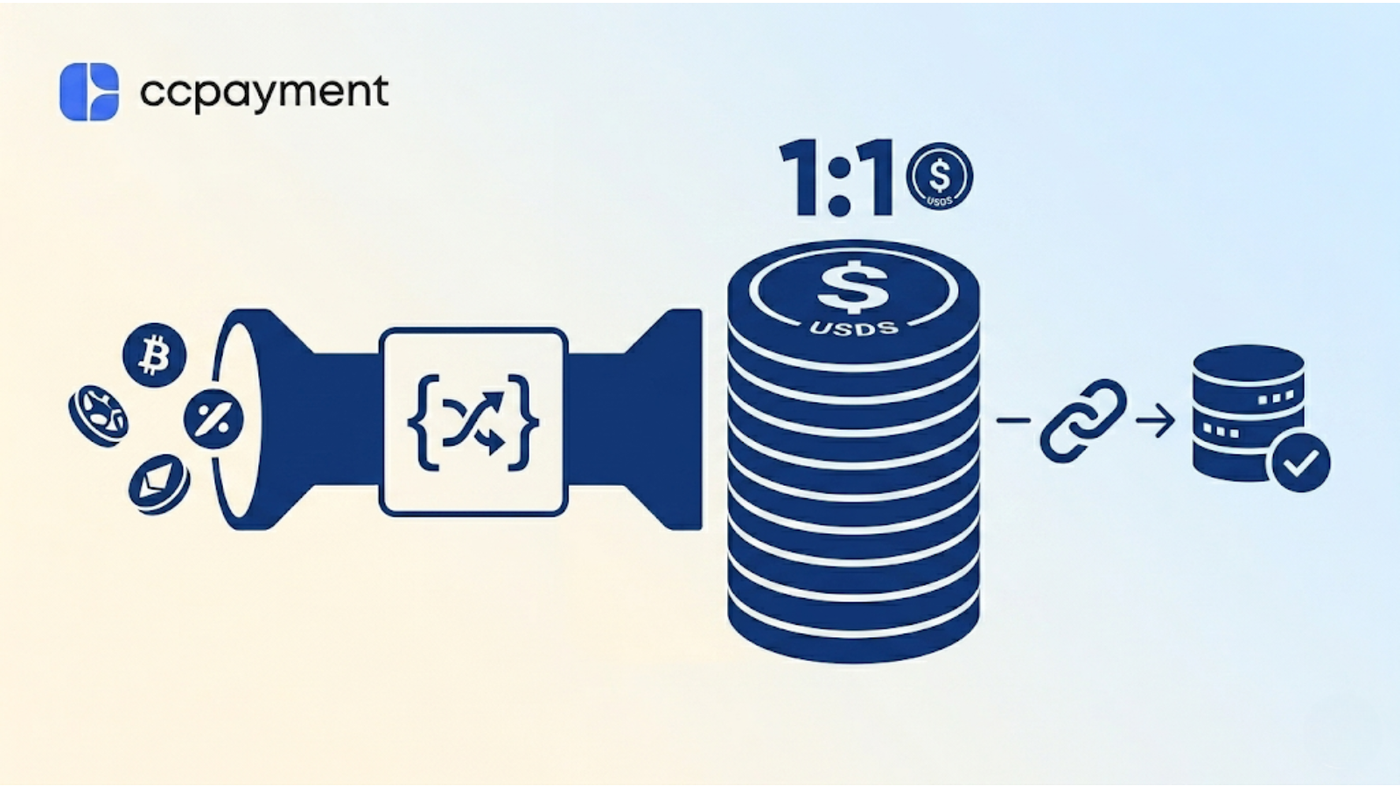
When growth teams advocate for native crypto payments, SaaS CFOs understandably raise operational concerns:
"What if the $199 subscription they paid in Bitcoin drops to $160 by tomorrow? How are we supposed to forecast MRR or track these transactions across different networks?"
This is exactly where enterprise-grade APIs shift the paradigm via 1:1 Stablecoin Settlement. It shifts the paradigm across two major friction points:
Eliminating the 48% "Unexpected Fee" Abandonment
According to the Digital Applied 2026 report, an alarming 48% of global users abandon checkouts due to "unexpected costs, taxes, or fees"—primarily the 2% to 3% hidden Foreign Exchange (FX) markups imposed by legacy fiat gateways.
A modern Crypto API allows you to price your SaaS globally in fiat-pegged stablecoins.
- The Frontend: The international user sees exactly $199, avoiding punitive bank FX rates.
- The Backend: Regardless of which volatile token the user selects, the API's liquidity engine automatically converts it upon receipt. It settles instantly into a US Dollar-pegged stablecoin (like USDC or USDS).
- The Result: Your treasury receives a mathematically stable $199, shielding your margins from FX volatility.
Building a "Touchless AR Pipeline" (Automating Reconciliation)
Beyond frontend conversion, programmable settlement eliminates the backend manual reconciliation nightmare.
OroCommerce’s 2026 B2B Payment Trends highlights that poor invoice processing leaves mid-to-upper-sized companies with $900,000 in delayed payments monthly. Accounts Receivable (AR) teams are trapped in tedious "exception hunting"—spending 20 minutes manually clicking through ERP screens to match a single, slightly short wire transfer to multiple open invoices.
A modern Crypto Payment API fundamentally resolves this through deterministic, on-chain verification:
- Instant Webhooks: Structured settlement data is pushed instantly to your ERP (Enterprise Resource Planning) systems.
- Elimination of Exception Hunting: Payments and invoices are "glued together" automatically without human intervention.
- Predictable Cash Flow: By auto-settling into USD-pegged stablecoins and feeding machine-readable data into your tech stack, you secure highly predictable, dispute-free revenue.
Unmatched LTV and Upfront Cash Flow — Tapping into a New Demographic
Beyond fixing the leaky checkout funnel and automating the back office, upgrading your payment infrastructure unlocks entirely new top-line growth metrics.
According to a comprehensive 2026 SaaS Payment Guide analyzing Web3 conversion trends, integrating a crypto payment gateway alongside traditional fiat processors provides several strategic advantages for SaaS merchants:
- Massive Upfront Cash Flow: When dealing with high-ticket B2B software, getting users onto annual plans is the ultimate goal. The data reveals that 60% of crypto users prefer to pay upfront for 12 to 36-month annual plans, compared to only 20% of traditional credit card users. You secure the full yearly value immediately without the risk of monthly drop-offs.
- Higher Spend & 2x LTV: Crypto buyers are shown to spend 2x more than traditional users. In fact, 43% of users spend more simply because digital assets are offered as an option, consistently making them the highest Lifetime Value (LTV) cohorts.
- Net New Customer Acquisition: This is not about cannibalizing your existing credit card users. 40% of clients who checkout via Web3 gateways are entirely new to the merchant, meaning this integration directly lowers your blended CAC and opens doors to a pristine, high-spending demographic.
The SaaS Checkout Showdown: Legacy Fiat vs. Modern Crypto API | |||
|---|---|---|---|
Metric / Feature | Legacy Fiat Gateways (Stripe, PayPal, Bank Transfers) | Modern Crypto API (with Native Checkout) | Impact on SaaS Business |
Checkout Time | 3,4 minutes (redirects, OTPs, clunky UI) | Often < 60 seconds (native UI, 1-tap/QR scan) | Recovers 19% of mobile drop-offs. |
Cross-Border Approval | High false declines (up to 15% blocked by algorithms) | Near-universal on-chain approval (bypasses bank blocks) | Captures previously lost global MRR. |
FX Fees & Pricing | 2-3% hidden spreads passed to the customer | Low transparent fees (0.2% - 0.5%) & no FX markups | Eliminates 48% of "unexpected cost" cart abandonment. |
AR & Reconciliation | Manual detective work ($900k delayed cash flow/mo) | Instant 1:1 Stablecoin Auto-Settlement | Saves AR teams hundreds of hours; clean ERP data. |
Integration Speed | Weeks of complex legacy compliance & coding | About 10 minutes using AI skill APIs | Frees up engineering resources. |
Conclusion: Stop Rejecting Global Revenue
In 2026, forcing a global audience through a friction-heavy fiat checkout isn't just inefficient—it is the fastest way to burn your customer acquisition budget.
By upgrading to a modern Crypto Payment API, you instantly transform your revenue pipeline:
- Speed: Slash the 204-second maze into a 45-second native checkout.
- Approval: Bypass the 15% international false decline trap entirely.
- Security: Protect your margins with 1:1 instant stablecoin settlement.
Don't let legacy infrastructure dictate your global growth. Empower your engineering team to drop the API integration time from weeks to under 10 minutes using our machine-readable AI SKILL.
Stop leaving 35% of your cross-border growth on the table.
About CCPayment
CCPayment offers an industry-low 0.2% service fee alongside 900+ cryptocurrency support, protecting your global business 24/7.
🔗 Explore the future of payments: ccpayment.com
🤖 Contact us: @CCPaymentSupportBot
FAQ
Why is cart abandonment so high in 2026?
According to Digital Applied, the main 'conversion killer' is the 3.4-minute friction in traditional fiat checkout, leading to a 70.19% abandonment rate.
Do I need to hire specialized Web3 developers to integrate a Crypto Payment API?
In most standard use cases, no. Modern enterprise Crypto APIs are designed similarly to standard REST APIs (like Stripe). Your existing web development team can typically deploy the native checkout component using standard SDKs and webhooks in a matter of days.
Will accepting cryptocurrency expose my SaaS MRR to market volatility?
Modern gateways are designed to significantly mitigate this risk through instant stablecoin settlement. If a customer pays for a $99 subscription using a fluctuating token, the gateway aims to instantly convert it into a US Dollar-pegged stablecoin (like USDC) upon receipt, providing highly predictable revenue.
Is it compliant and safe for my SaaS business to handle crypto transactions?
Reputable enterprise crypto gateways incorporate Real-Time KYT (Know Your Transaction) monitoring. This acts as a robust compliance layer that scans the blockchain history of incoming funds. If a transaction originates from a flagged source, the system is designed to intercept it before settlement, assisting your business in maintaining AML standards.
Will adding a Web3 checkout confuse my traditional, non-technical customers?
Adding a crypto gateway provides an alternative payment method, not a replacement. It sits alongside your traditional rails. Modern native checkouts use intuitive QR codes and clean interfaces, striving to make the payment process as straightforward as scanning a standard digital wallet code.
How do I reconcile crypto payments within my existing accounting software or ERP?
Because incoming payments are typically auto-settled into fiat-equivalent stablecoins, your monthly accounting process becomes much more predictable. Enterprise gateways provide machine-readable reporting and API exports that can be mapped into standard accounting software, significantly reducing the need for manual reconciliation.